
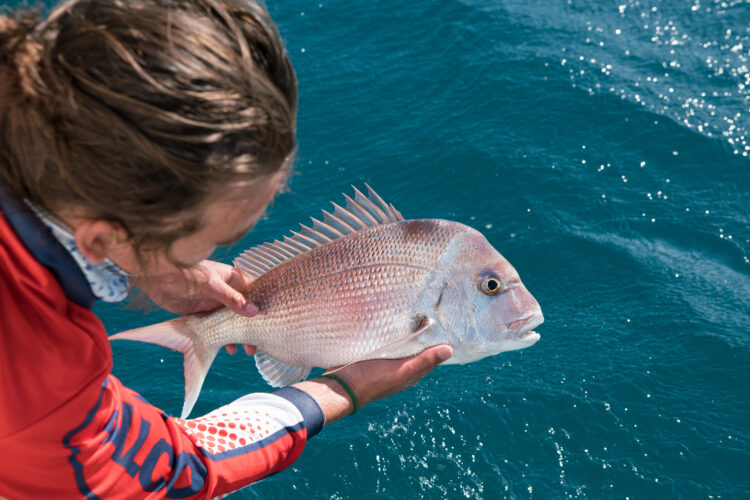
THE Western Australian Government has announced major reforms across WA’s coastline, which it said will further protect demersal fish such as pink snapper, red emperor and dhufish.
The latest scientific stock assessments for WA’s prized demersal fish have shown several species including dhufish, which are only found in WA, are under severe threat.
After reviewing the science and undertaking stakeholder consultation, including holding a Fishing Future Forum last month, the State Government has announced new targeted actions to be implemented along the WA coast.
- Important State-wide reforms will be introduced to protect severely depleted fish stocks from extinction
- West Coast Region to become an exclusive recreational fishing zone for snapper and dhufish following a 21-month recovery closure for boat-based recreational fishing
- West Coast region to be closed permanently to commercial fishing for demersal fish from 1 January 2026, with a compulsory buyback of commercial fishing licences
- Recreational and commercial fishing will remain open in all other regions under new management plans
- Cook Government investing $29.2 million to support recovery efforts, including $3.3 million for tackle shop rebates to encourage fishing for species not under threat
Under the reforms, the West Coast fishing region from Kalbarri to Augusta will not reopen on 16 December 2025 and will become an exclusive recreational fishing zone, following a 21-month recovery closure for boat-based demersal recreational fishing.

ABOVE: Western Australia Premier; Minister for State Development; Trade and Investment; Economic Diversification
During this recovery closure, a policy on spatial and further temporary closures to protect spawning fish will be finalised, before the fishery reopens in September 2027 for spring season. A species-level management approach that recognises the differing rates of recovery between demersals will also be considered during this time.
The West Coast Zone will be permanently closed to commercial fishing for demersals from 1 January 2026, with a compulsory buyback of commercial fishing licences.
Recreational fishing for demersals will remain open in all other regions with additional State-wide management measures introduced.
These include real-time reporting of demersal catches and revised catch and bag limits starting in later in 2026.
Charter fishing in the Perth metropolitan area will be closed from 16 December 2025, however, charter fishing for demersals under the tag system will continue in the remainder of the West Coast Zone under a reduced annual catch limit of 25 tonnes.
To support the reforms, the State Government will invest $29.2 million to help stocks recover to sustainable levels so there are fish for the future.
The Fisheries Support Package will support commercial and recreational fishers adapt to the incoming State-wide reforms needed to help rebuild severely depleted demersal fish stocks.
The package includes:
- $20 million Compulsory Fisheries Adjustment Scheme ‘buy out’ of the commercial line and gillnet fisheries in the West Coast Region;
- $1.9 million to support alternative recreational fishing experiences and encourage fishers to target other species; and
- $3.3 million for tackle shop rebates for recreational boat owners facilitated by ServiceWA.
In other regions across the State, the following reforms will be introduced for commercial demersal fishing:
- a two-year recovery closure will be put in place for commercial fishing for demersal species in the Kalbarri area before transitioning to quota management within the recovering Gascoyne fishery;
- due to the success of recovery efforts in the Gascoyne region, there will be no further reforms to commercial fishing arrangements;
- the Kimberley, Pilbara and South Coast regions will have a 50 per cent commercial catch reduction from 1 January 2026, and transition to new quota management arrangements; and
- trawling for demersal fish by commercial operators will be permanently closed in the Pilbara, the only zone in WA where it occurs.
A new advisory council reporting to the Fisheries Minister will also be established and include members from industry, science and the recreational fishing sector.
ABOVE: Recfishwest CEO Dr Andrew Rowland.
Recfishwest CEO Dr Andrew Rowland said: “This is the biggest fisheries reset in WA’s history. It’s bloody tough and a shock to all of us. It is a seismic change and people will need time to absorb what it means.
“The winner right now is dhufish – and that matters. Fishers have been calling for stronger protection, and this decision delivers that.
“It’s short-term pain for long-term gain – the winners in the long run will be the fish and the fishing community.
“In addition, the Government’s move to buy back commercial effort in the west coast region and prioritise recreational fishing when the fishery reopens marks a significant policy shift.”
“A rebuilt fishery means more fish in the water, more opportunity, and more access in the long run,” said Dr Rowland.
For more details on the reforms search fishing futures WA or go to www.dpird.wa.gov.au/demersal.