DIVING in and seeing what lies under the surface offers fishos an invaluable insight into fish behaviour.
There’s definitely a real advantage in watching and understanding how some of our more popular target species – like flathead, jewies and even baitfish – behave underwater.
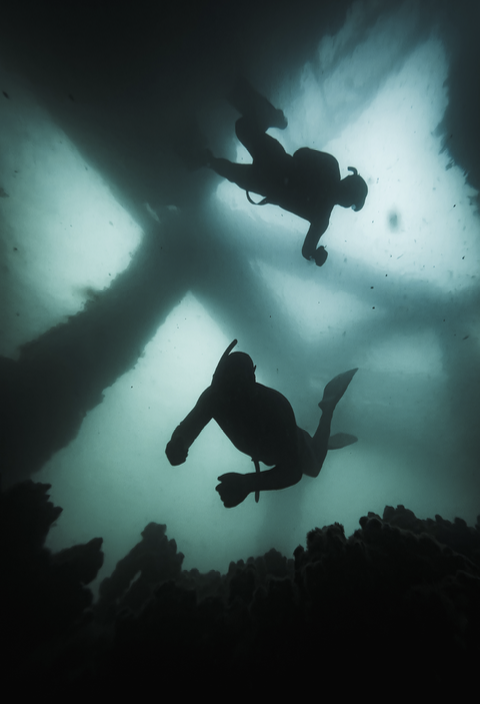
Growing up at Port Macquarie on the NSW Mid North Coast, my free time as a kid was mostly spent fishing and surfing. As I got a little older, I was immersed in freediving and spearfishing. I soon became pretty obsessed with “diving”. Though, when I moved to Newcastle for university, it eventually fell to the wayside and I once again became solely focused on chasing fish with rod and reel. It wasn’t until a couple of years ago that I dusted off the dive gear and got back into freediving more regularly.
Since then, the divide between spearfishers, divers and anglers has become more apparent to me than in the past. For whatever reason, many anglers I know are pretty reluctant to get in the water (many are seeing too many sharks, perhaps?) and few spearfishers are interested in fishing with rod and reel. Consequently, there’s not much information shared between the two forms of fishing. But there’s a lot of knowledge to be gained if you bridge the gap.
While most keen anglers are pretty good at interpreting cues – like structure, current and the presence of bait – to figure out what’s happening under the water where they like to fish, nothing can quite compare to jumping in and observing what’s going on down there first hand. Though, modern electronics have, no doubt, made it a lot easier to visualise what lies on the bottom, too.
Obviously, jumping in and having a look around is limited to areas where it’s safe and relatively clear – like the lower reaches of estuaries, around headlands and inshore reefs. So, in this article, I’ll share some of the observations and tips I have made while diving with some of our more popular target species that can be applied to areas where diving isn’t a realistic option.
Observations
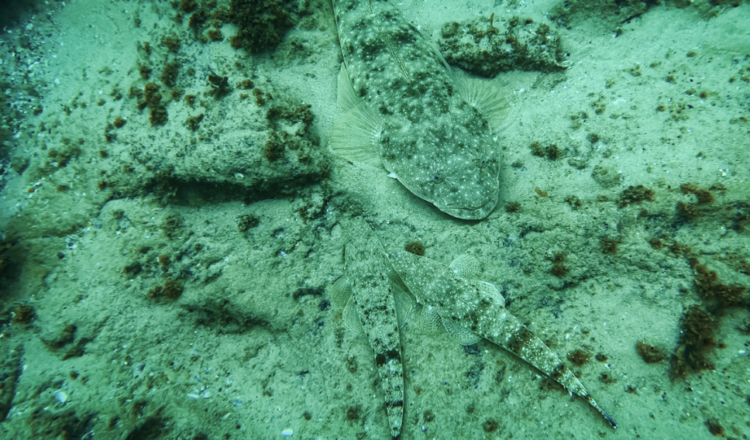
Fishing World published some footage I put together of multiple “croc” sized flatties in the Hastings River. The video has already amassed about 50,000 views and piqued the interest of lots of keen flattie fishos. What many people don’t know about that video: it was all filmed in a very small area.
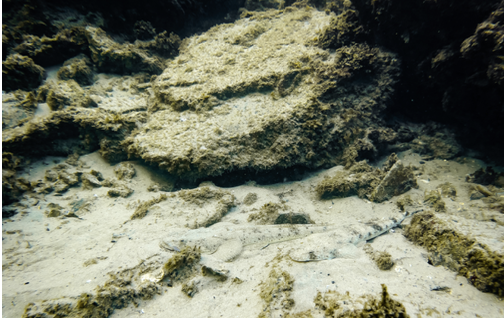
Though not considered as a “schooling” fish, I often see flathead of all sizes laying in large clusters. During the warmer months, big “breeder” female flathead lay in lower reaches of the estuaries in large groups. Many of these bigger female fish – often in excess of 70 centimetres – are usually accompanied by several smaller (presumably male) flathead. Sometimes, it’s staggering just how many flathead can be laying in close proximity to one another. At times, there could be up to 30 flathead in an area the size of a household swimming pool. That’s why I always make sure I have fished an area thoroughly, often casting in the same spot, where I have just caught a flattie.
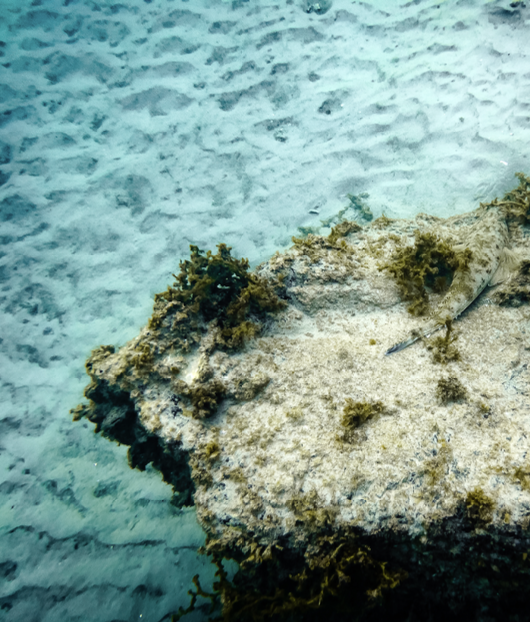
Another interesting observation I have made while diving with flatties, is that: often flathead lay really close or on top of structure. Most people imagine that flathead lay on soft sand or mud. But quite often, while diving, I’ll see them laying right on top and amongst structures like weedy rock shelves, rock walls, oyster piles and coffee rock boulders. They definitely don’t need a “soft spot” to lay in ambush! Fishing structure for flathead can be problematic, but it’s worth experimenting with weedless or less snag prone lure styles to fish structure for flathead.
Mulloway are a popular target for both line and spear fishos. As many keen spearos will attest, mulloway love sitting in the wash! Many of the prime mulloway cracks and caves along the coast are only a few feet deep and often hold some seriously big fish, too. I no longer hunt mulloway with a speargun these days, but I do like chasing them along the beaches and rocks with lures. I apply a great deal of the knowledge I gained from spearfishing and diving when chasing these fish with rod and reel. Consequently, I always concentrate my effort around washy areas. But this doesn’t mean fishing the turbulent wave zone. The perfect scenario is a layer of wash pushing over a slightly deeper channel, hole or gutter of “green” water, which creates cover for mulloway to sit and ambush baitfish.
Another interesting observation of mulloway is their habit of sitting very stationary and suspended in the water column around structure. They are seldom active fish in daylight hours. I would consider mulloway more of an ambush predator during the day – particularly along headlands – and as long as the conditions don’t change too much, they’re often found in the same spot for days.
I don’t see as many mulloway while freediving these days, but I’m also not in the water as frequently. Though, as far as the science goes, it’s pretty clear: they’re not in great shape.
Much like jewies, you need to be fishing the right mix of wash and turbulent water when chasing fish like the Eastern rock blackfish or drummer, too. It’s amazing how closely concentrated these fish are to the washy, turbulent areas of headlands and rock shelves. They’re also not afraid of very shallow water!
The black drummer is relatively abundant along the NSW coastline during the cooler months. Drummer are not commercially harvested and are one fish that I do target with the speargun these days. Drummer are flighty fish that don’t venture too far from shelter – usually cracks, boulders and caves. They’re great eating and are relatively easy to hunt around my neck of the woods. They’re also great fun to catch on light tackle off the rocks.
What hasn’t seemed to have changed over the 15 years or so that I’ve been diving, is the abundance of luderick. I think the luderick is probably the most abundant of all “bread and butter” fish along the NSW coastline. Once you’ve spent a bit of time in the water, you soon realise just how many there are. I don’t think I’ve ever been for a dive along the coast and not seen luderick. In some areas, it’s not uncommon to see schools of hundreds, if not thousands, of fish. That said, I’d imagine there are areas where the “local stock” might not be as strong as it once was.
Though most luderick fishos prefer winter and spring, there’s plenty of luderick on offer along our headlands and rock walls in summer and autumn, too. If you’re just getting into fishing or looking to eat more fish, I’d suggest targeting luderick. There’s plenty of them!
When fish aren’t biting
Donut or zero fish days are pretty commonplace for anglers. A lot of the time it happens when targeting one particular species, sometimes not. Donut sessions are definitely more common among lure fishos. Many of us blame a lack of fish when it comes to donut sessions, but most of the time that’s just not the case. This can’t be clearer once you’ve spent a bit of time underwater observing your target species.
I’m always amazed by how hard it can be to get fish to bite somedays in my local waterway, because I know just how many fish are usually down there. I often use freediving as a form of reconnaissance to gauge where certain fish might be congregating – only to go back at a later date to fish with rod and reel. It’s astounding that, for whatever reason, fish will be lining up to take a lure one day and completely disinterested the next. Many experienced impoundment Murray cod and barra fishos know this. Instead of being discouraged, it’s something that anglers just have to accept.
I’ve seen this same kind of “lockjaw” first hand with saltwater species like kingfish and big flathead, too. Knowing and accepting this type of fish behaviour is important in developing persistence. A lot of the time, targeting trophy fish is a numbers game: you’ve got to put a certain amount of hours in to get a result. Once you refine the approach to catching some of these species, the formula generally holds true to a startling degree of accuracy.
Take the plunge
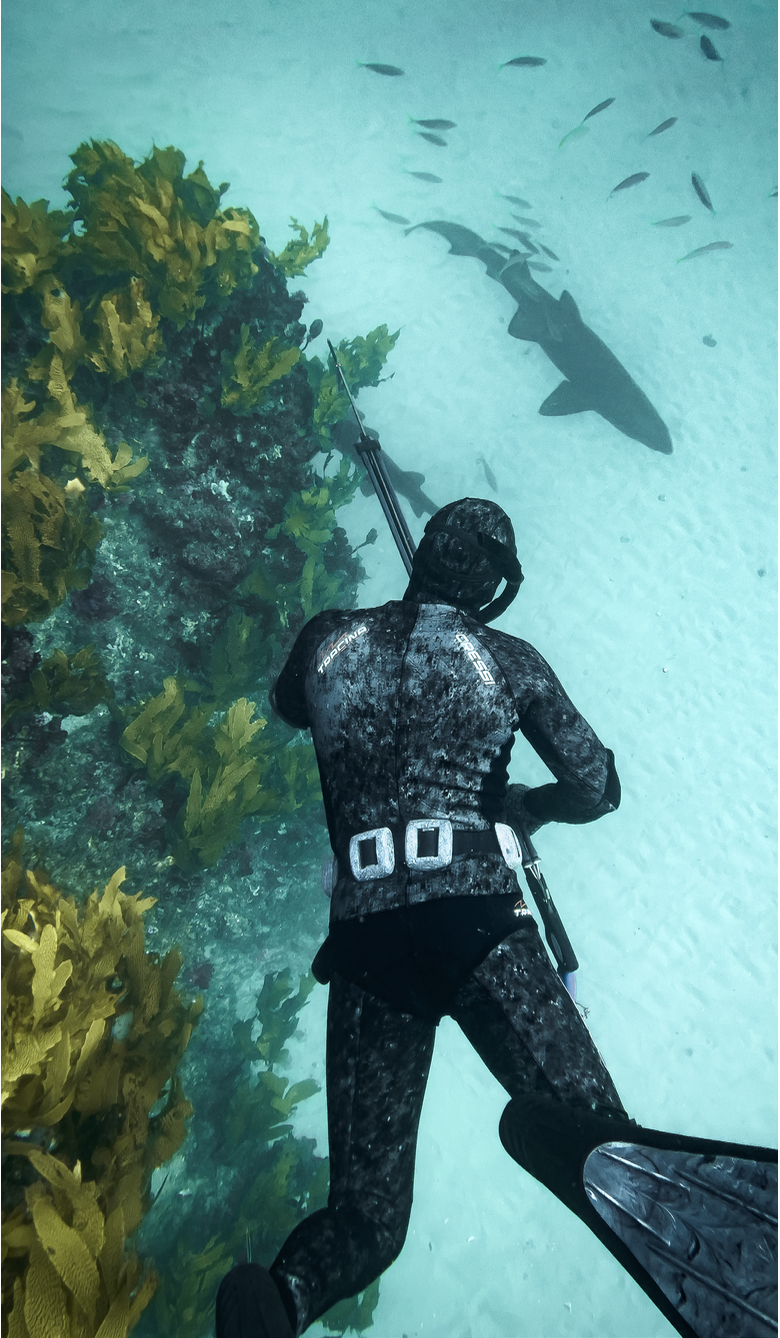
With the amount of sharks around in recent months, it’s not surprising that many anglers aren’t too keen on getting in the water. But if you’re sensible, it’s a pretty safe activity. Realistically, the risk of shark attack is extremely rare.
A mask, a snorkel and a pair of fins are the bare essentials for taking up snorkelling and freediving. This is enough to get a good perspective of most of the areas we like to fish, especially in warmer water. If you add a wetsuit, you will need to add a weightbelt and some weights to offset the extra floatation of the suit. The long bladed freediving fins are helpful but not essential in the early stages. Knowledge of some basic freediving safety procedures is also important, and never dive alone.
Patrick Linehan is a professional fishing guide at Castaway Estuary Fishing Charters based in Port Macquarie, NSW. Get in touch here: www.castawayfishing.com.au.