
SUMMER is undoubtably the busiest time of year on our estuaries. Sleepy hollows become packed with people, parking is hard, and the usually quiet boat ramps become congested.
It’s the time of year when offshore angling becomes tougher for many of our inshore reef species such as snapper and pearl perch and it’s too early for the tropical species that favour the warmer waters of autumn. Luckily though, summer is a bountiful season for recreational anglers fishing the estuaries.
Smaller flathead congregate over sandflats and the associated channels and drop-offs, and with an understanding of techniques, become a staple menu item for many. The 40 – 50 cm fish are the tasty models and they aren’t too choosy on what they’ll eat. Bait fishermen can try rigging a whitebait on a gang of small hooks, weighted with a small sinker or use fish flesh strips or live poddy mullet. Lure orientated anglers can cast or troll diving hard-bodied lures, soft plastics or surface lures, it’s all about what floats your boat. Soft plastic lures are hard to beat due to their relative low coat and ease of use. All you need do is skip one along the bottom and wait for a bite.
Whiting are another summer favourite. These mini-powerhouses chase crustaceans and small fish through the shallows and will take both bait and lures. Salt water yabbies are a versatile bait: easy to collect (with a yabby pump), and they catch a range of species. As whiting prefer a moving bait, it’s important to match the size of sinker used with water depth and the strength of the current.
The sinker should be of sufficient weight to keep the bait near the bottom but light enough to allow the current to move the sinker across the sand. Whiting are attracted to the colour red, so the addition of 2cm of red tubing above the hook helps. The use of small surface lures is a popular method for whiting. By using a constant retrieve to imitate a fleeing prawn across the surface of the water, whiting will track and hopefully eat the lure. It’s a heap of fun and there are few fish that taste as good as battered whiting fillets.
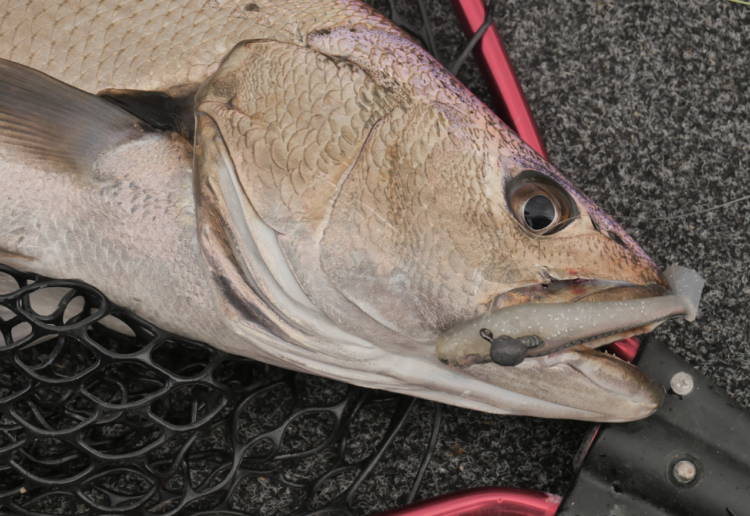
School mulloway are a prized estuary species, and they are available over summer if you know where to look, and look you must. They love structure and the eddies that result as water flows past an obstacle.
Look for deep water, be very quiet and use a sounder to locate mulloway schools. In many instances mulloway seek refuge from strong currents by packing tight in eddy pockets and the front of substantial obstacles that create a small “pressure wave” against the leading edge. Given that it can be impossible to get baits or lures in front of the fish during periods of high flow, the most productive fishing is associated around tide changes, either low or high, irrespective of the time of day. Of course, if the tide change is during the low light periods of dawn or dusk, so much the better!
Mulloway readily take baits such as live mullet, squid and strips of fish, but fresh (as in unfrozen), are a huge advantage. Lure fishos use soft plastics or soft and hard vibes. With sufficient weight, the lure can be cast tight against structure and reach the bottom before drifting away. A lift and drop retrieve is effective, with most bites to occurring as the lure flutters back towards the bottom.
In northern estuaries, approximately from the Macleay River north, mangrove jack become viable targets. These hard-hitting brawlers hit lures and bait with ferocity rarely encountered outside of the tropics, and will do their utmost to get back to cover once hooked. Expect to put in a lot of time to catch these guys as they are very mobile and hard to track down. Again, this is structure orientated fishing, so try around submerged timber, rock walls and bridge pylons.
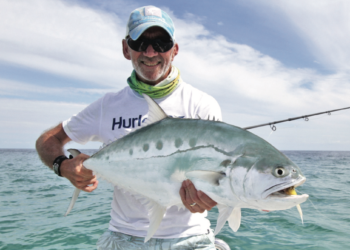
Estuary by-catch is not to be sneezed at. In the north, trevally are associated with waters that hold school mulloway and mangrove jacks. Look for surface explosions and cast forward of the direction they are moving with small surface lures (poppers) or soft plastics. Southern by-catch for mulloway anglers using small lures, may include estuary perch. These bass look-alikes offer great sport and multiple fish can be taken off the one piece of structure.
In closing, summertime offers exciting fishing in our estuaries. Get out early or late and try something new.