MOST of my prized catches share a common theme in that they are red in colour: namely mangrove jack, coral trout and snapper. What’s not to like about this trio, when all of them take a bit of nous to catch, are outstanding sport and if I choose to, are fantastic on the plate.
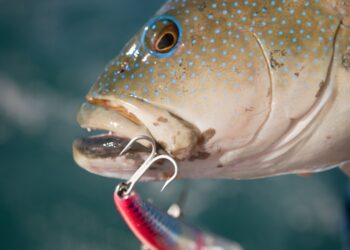
In Northern NSW, mangrove jack are premium recreational target species and the month of April is a great time of year to target them before the water cools and they go quiet. They aren’t usually easy to come by, so each fish takes commitment and perseverance. There’s plenty of guys and girls who are addicted to fishing for the red terror, fishing for little else during jack season. There’s nothing subtle about these guys, which is probably one of the main reasons I target them. They bite hard and fight harder and I’m sure from the look in their eyes when I remove hooks, they think about biting me as well.
For me, catching these guys on a lure is the ultimate challenge, although they are easier to connect to with bait; particularly the XXL individuals. Hardbody lure fishing is the most brutal method to target jacks because, like barramundi, they respond to aggressively worked lures. Diving minnows made to twitch, bolt and pause are ideal and because they are retrieved on a tight line, the hits are brutal. Rods bend double in an instant and the fish light their afterburners instantly. When shallow diving minnows are used, it is common to see a swirl ahead of the lure a second or two before the lure is hit, presumedly resulting from the jack turning in front of the lure so it can attack on the way back to cover!
They bite hard and fight harder and I’m sure from the look in their eyes when I remove hooks, they think about biting me as well.
A 15kg outfit offers a good balance for most timber, rock wall and pylon fishing as it gives the angler a fair chance of dragging fish into the open before they reach cover and cut the line. However, in some locations, given the type of structure, how it’s laid out and the size of the fish, a 24kg outfit still results in minimal success. Baitcaster reels are favoured by many because once mastered, they offer extreme accuracy and greater feel. Shallow to deep diving suspending minnows in the 75 – 125mm length range are ideal, with red and gold being my personal favourites. Currently, my preferred hardbodies are: Daiwa Steez Current Master 93SP-DR, Lucky Craft Pointer (SP and XD) in 78mm and 100mm and Atomic Jerk Minnow in 65mm and 80mm.
Snapper are the red fish that become a priority as the mangrove jack season finishes. April is the time to get ready for the cooler months when snapper schools move come inshore onto near shore reef. The magic of snapper is their availability, eat-a-bility and the chance of landing a real horse, which in my book is over 90cm in length. Metre snapper are the holy grail for snapper anglers on the east coast, and like many, I have yet to get there, although in my defence, the reefs near home that I fish are only in 15m – 25m of water, so most big fish cut the line unless I’m able to get the boat in pursuit quickly – not easy when a drogue (sea anchor), is out!
These days, I usually use two rods when chasing snapper. The first, and the one I use most actively, is a Daiwa soft plastic outfit (Commander Garuda/Certate 4000) spooled with 15kg line. The second is a slow jigging outfit (DB Solid PE3/Ocea 1500). Soft plastic jerk baits in 7” and 9” are my go-to lures, with Daiwa Bait Junkies in Baby bass and Berkeley Jerk Baits and Nemesis in Pepper Neon being favoured colours. Large fish are most responsive to a soft plastic that sinks slowly towards the bottom, so I usually start with a ¼ oz jig head and go to 1/8th or 3/8th if required. In deeper water with current, 1/2oz jig heads might be required.
I’ll usually cast out the plastic at 45˚ to the drift and then sink a jig whilst the soft plastics wafts down towards the bottom. If the jig is not hit on the sink (keep your finger on the spool as it drops), I’ll lift it a metre or two off the bottom and then work it hard before stopping and waiting. Snapper are attracted to the wildly moving jig but won’t strike until the action settles. Then they strike the hook – which when you think about it is interesting. I’ve had best results using ‘decorated’ hooks, particularly the BKK hooks that carry coloured tinsel and a flasher – much more effective than a bare jig hook. Of further note, is the success I’ve had by threading one of these hooks into the look knot that I use to attach jig heads whilst plastic fishing!
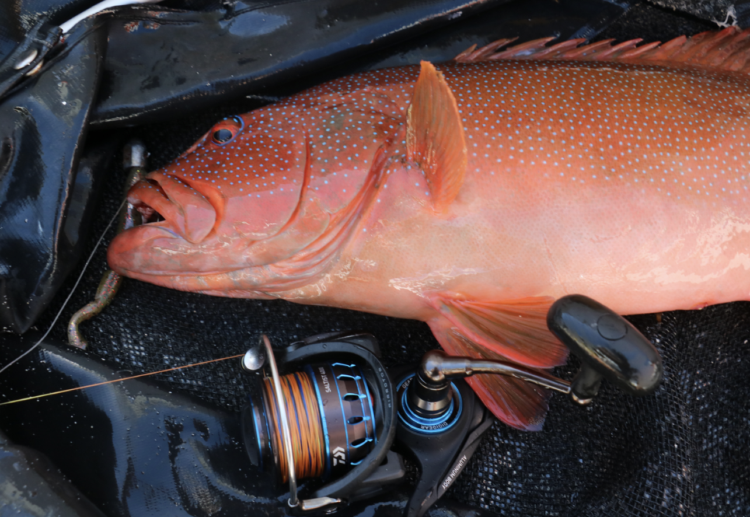
And then there’s coral trout … so much fun on a beefed-up snapper outfit, but perhaps more so is that I am camping on a Great Barrier reef island when chasing these brutes. What’s not to like?