
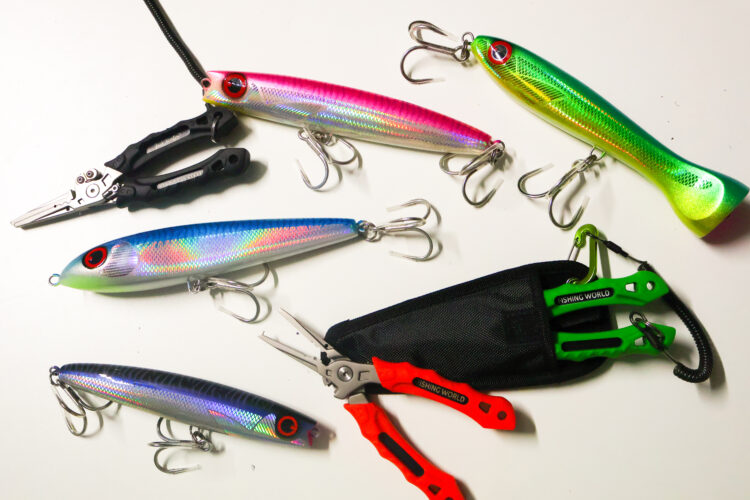
FCL Labo is a boutique lure maker from Kurume in southern Japan, founded by Yoshitaka Tsurusaki, who has over 30 years’ experience designing and building lures. Launched in the early 2000s with a focus on Kingfish, GTs and the local seabass, the brand has since broadened its range to cover everything from tiny native trout offerings to baits capable of enticing giant bluefin tuna.
The lures use moulded foam-resin bodies with full through-wire construction, allowing for intricate shapes and actions that are difficult to achieve with traditional timber. The solid resin won’t swell with water and, while teeth can mark or pierce the surface, it rarely affects the lure’s action. As a small, handmade producer working in limited runs, FCL Labo can quickly refine and expand models, introducing new weights, sizes and tuned variants as needed.
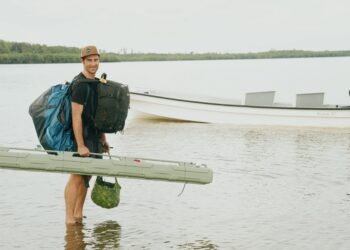
I have been testing out some of the range at home, but was able to put these lures to work in the Solomon Islands with the “Solomons On The Sauce” experience.
The two lures that I mainly utilised were the FCL Labo CSP and Ebipop. Every single time I tied on one of these lures, my confidence jumped up a gear. I also chose to tie one of the FCL lures on when the action was particularly slow to improve my chances.
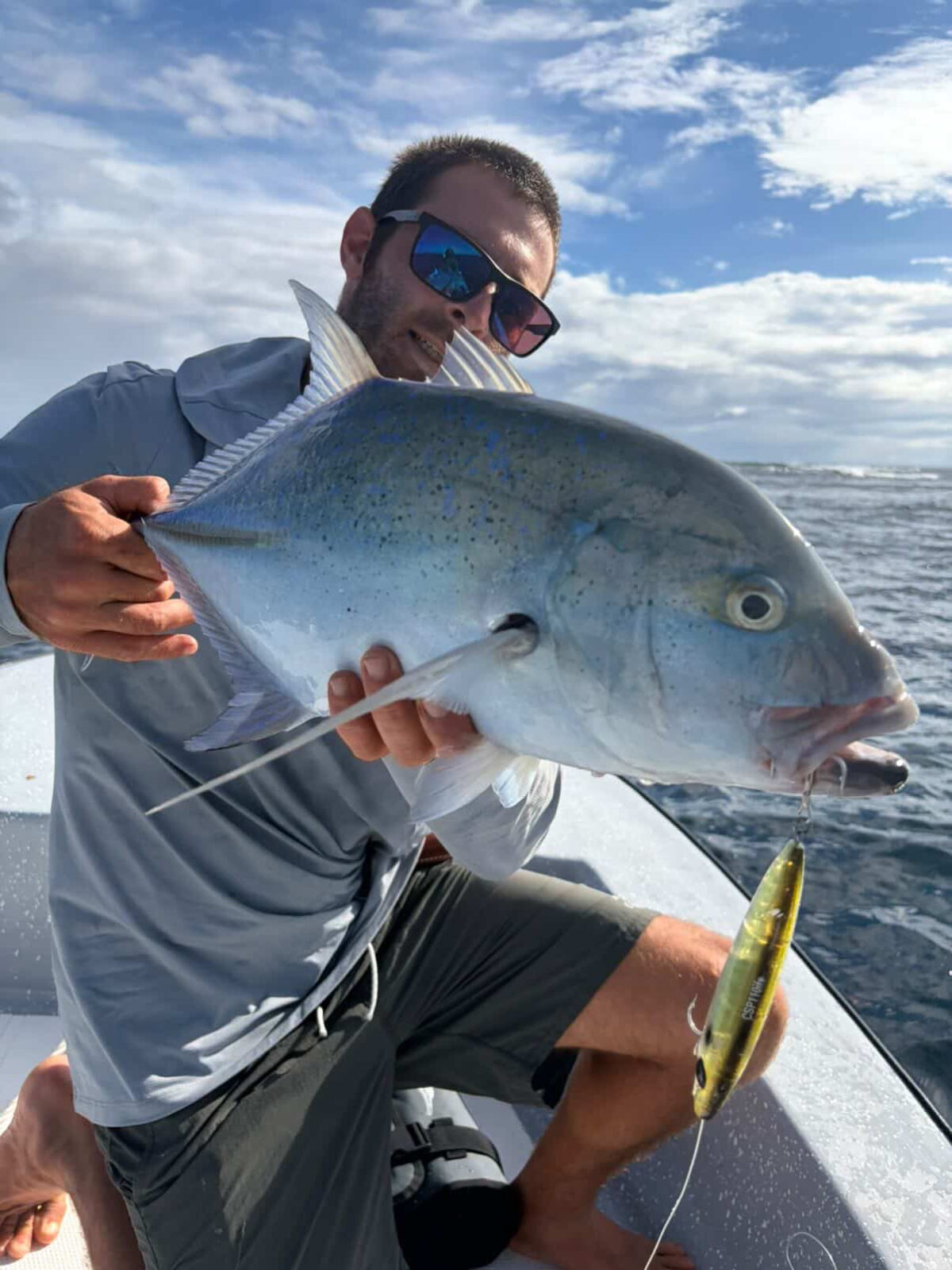
I used the CSP in the smaller 110mm size all the way up to the 220g in both floating and sinking options. I preferred the sinking options if there was a bit of chop and went to the floater if the conditions were calm. It was definitely handy to be able to make that choice by having both available. I think that if I were forced to choose between floating and sinking, I’d have to go with the sinking option because it is more versatile and workable in different conditions. However, if it is calm, the floating option outperformed the sinking.
I used the 110mm casting into flats. I was looking for water that was 1-2m deep with current and swell. The coral was preferably live coral with turquoise gaps of sand in between the interconnected bommies. Coral trout and other reefies were incredibly aggressive in these situations. The 110mm size has a bullet-like cast and is effective in this situation because they work well on a fast retrieve as well as slow. Being able to sight cast at the bommies, I would rip the lure in with long fast sweeps and slow it right down when approaching the edges to maximise bite time in a less dangerous position. I ran 60lb leader and used my 25lb plastics rod. I pulled out my fair share of fish, but it didn’t take long until I lost both of the 110’s I had at my disposal.
To be honest, I worked the exact same ground with my 220g option and my GT outfit, simply because it was working just as well, the trout were crazy aggressive, and I was able to manhandle the majority of fish. It is always the fish that got away that you remember. On the last day of fishing, I was sweeping a 220g floating FCL Labo CSP across the flats when a dinosaur coral trout got hold of my lure and blasted me into the reef on 200lb leader. Another one bites the dust.
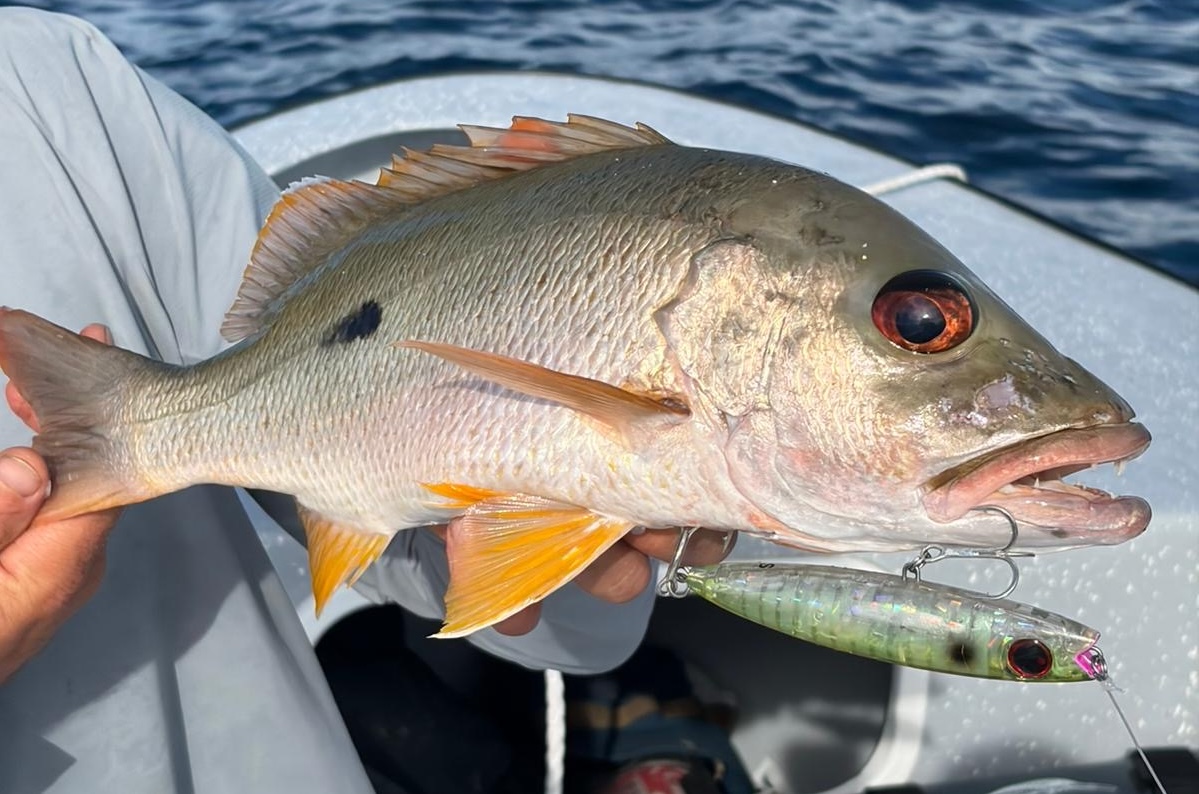
With the wide range of handmade and mass-produced stick baits available in today’s market, I can highly recommend FCL Labo CSP. They are great for trips abroad, but will also be just as impactful at your local fishing for tuna, Spanish mackerel and kingfish. They are all versatile in their retrieve, skipping across the surface to excite a bite, elongated sweeps to get a big kick, “S” bent and slight bubble trail left behind with the chiselled face or faster walk the dog twitchers. This allows you to hone in on how the fish are feeding with a single lure. I would be confident packing only CSP’s in a variety of sizes and colours as opposed to different types and makes of stickbaits. Being able to mix up the retrieve also keeps the angler focused and in the game, win-win.
I was very close to retiring a sinking CSP 180mm sinking, in the colour Black Glow Belly that had caught an enormous variety of quality fish. The lure had copped a beating and still maintained the integrity of the paint work and swam as if it had just been unwrapped. Unfortunately, this lure was also donated to the reef when a hole was left in the ocean by an unidentified reef species that will haunt me for a while.
The popping option that I used was the Ebipop again in a range of sizes. On day one, we were faced with slight surface chop, so I opened up my split rings and replaced a stick bait for a popper. The colour ‘white glow belly’ would soon be known by our skipper, James, as the “lucky lure”. A large coral trout on the 4th cast, red bass and some decent GT’s all in quick succession. I will, however, miss this lure. As a larger GT bricked me as the sun set. Other fishos were getting great results with poppers in white colours throughout the trip, and I knew that my go-to was lost, devastation.
What I will say about the Ebipop is that it is the easiest popper to retrieve that I have ever experienced. I noticed that I was casting and retrieving my poppers more consistently with less effort. The lures hardly skipped and grabbed at the surface without much effort. That infamous slurping sound of a popper burying itself is easily achieved with the Ebipop. Also, it is clear that the action doesn’t stop with a loud and obnoxious splash; the lure’s primary action occurs below the surface as the tail wags, showing off the side panels to fish that are excited by the action. I couldn’t really work out why the eye was painted at the back of the lure when undertow. My only idea was that with the shape of the lure, it actually looked like it should be there. I don’t think it made much of a difference either way.
FCL Labo are not a cheap lure; they are handmade and have the longevity in the industry to back their reputation. You can get cheaper lures; however, if you are looking for a premium casting option, FCL Labo is relatively cheap, as it is easy to go overboard. I suppose they have landed on a unique medium with the use of the resin foam to cast the entire lure as opposed to just finishing off the outer layer. I may be wrong, but it seems like this could be a more time-effective building construction with fewer steps required to manufacture a highly durable and effective lure.
Duncan from FishHead was highly valuable in supporting my lure choice. I told him where I was heading and the species I was targeting, and he put forward his recommendations in sizes and styles of lures. His social media videos were also very easy to gain insight into the best way to work each lure. Unfortunately, I will likely be giving him a phone call sooner than expected to discuss restocking my barren lure roll from a very worthwhile trip.
Check out Fishhead.com.au for more details.