
FLOAT fishing is a technique that is seemingly underutilised by modern anglers but offers many advantages
for those in the know. The basic premise of using a float is to suspend your bait off the bottom but there’s more to float fishing than meets the eye. Not only can floats offer a novel solution in a number of different scenarios, but float fishing is also an exciting and visual form of angling with the anticipation of the float bobbing around leading to the thrill of a strike and the float suddenly vanishing below the surface.
FLOAT FISHING ADVANTAGES
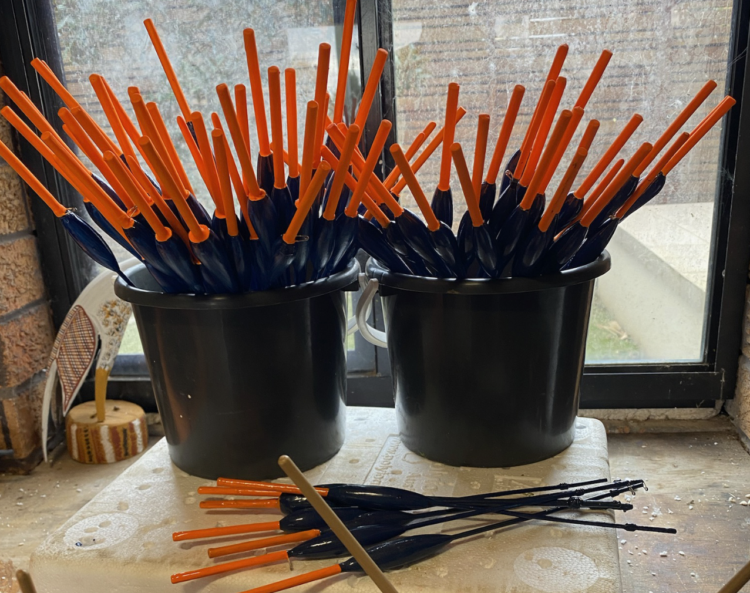
Using a float offers a number of benefits and one in particular is the ability to accurately set the depth of your bait and target fish feeding in a particular segment of the water column. By allowing your bait to however at a fixed depth, you can also fish above snaggy structure like trees, weeds, rock and reef without getting caught up or fouled. Using a weighted float allows you to cast light unweighted baits further than what you otherwise resulting in a more natural presentation that can drift along unimpeded. Finally, a float acts as a visual strike indicator and when painted with an fluorescent orange, any enquiries and strikes can be spotted from a long distance.
FLOAT TYPES
Floats come in many different shapes and sizes, and each has their own unique characteristics however the basic principle is that each float can carry a certain amount of weight before sinking. Long slender floats like pencil or quill floats are slender and have offer buoyancy therefore are most applicable to still waters or finesse applications where a fish can take the bait and feel minimal resistance. Round or pear-shaped cork, foam and polystyrene variants encompass the ever-popular bobby cork. This family of flats are robust and offer a simple yet effective methods of flotation that can be readily dialled up or down by switching float size. The buoyancy of bobby corks allows for larger models to be weighted are often used by rock fishermen to cast unweighted baits reasonable distance. Bubble floats are floats that contain an air chamber that can be left full of air for maximum buoyancy or partially filled with water to decrease buoyancy and add weight to assist with casting.

FIXED AND RUNNING FLOAT RIGS
Floats can be fished with either the float fixed in place on the line or with the float running along the line. A fixed float is a relatively simple rig and with float secured in position and doesn’t move along your mainline. The float is generally fixed to the line with a high friction connection such as a toothpick to jam the mainline against the tube of a bobby cork or elastic bands to compress the line against the stem of a pencil float. Fixed floats are quick and relatively simple to rig but can become cumbersome to manage if trying to fish deep, especially when using a shorter rod. A float sliding or running on the mainline is allowed to travel freely till it hits a stopper. You can buy small rubber stoppers that are easily adjustable from most tackle shops or can tie your own stopper knot using a piece of yarn or wool. Because most rubber stoppers and stopper knots are quite small, a small bead is often threaded onto the mainline directly after the stopper to prevent the eyelet of the float passing over the knot. The depth of a running float can be easily adjusted by moving the stopper and you can fish depths greater than the length of the rod with ease.
NOVEL FLOAT RIGS
The standard float rig involves a bait suspended beneath the float with weight added to the leader if required to ballast the float or bait however there are a number of novel uses that can be dynamite on certain species or when the fish are fickle. A bubble float can give you a readily variable “floating weight” and which can be useful in several fishing scenarios. When surface fish are fickle in the saltwater, a small fly can be easily cast and retrieved behind a bubble float, making for an exceptionally effective rig when everything else isn’t working. Similarly, you can prospect a great deal of ground in a trout lake during the night or day by casting and retrieving a bubble float trailing a trout fly. Certain species feed actively on the surface and one of these that I target periodically is garfish. Whilst most people chase gar the traditional way, I like to use a paternoster style fig with the float tied to the bottom of the rig and a couple of dropper hooks above. You then cast the rig out and keep tension on the line which keeps your baits on the surface and can be dynamite when the garfish are feeding actively.