HAVING witnessed a number of highly experienced recreational anglers, fishmongers and chefs process fish, I have become very curious about the knives they choose.
It seems recreational anglers are choosing filleting blades such as the Victorinox Swibo flexible fillet style as the ideal choice, maybe going up a size for larger species. I see a lot of fish mongers that have honed their Dexter blades, after years of sharpening, to be wafer-thin. They have proven to be reliable on a commercial scale, and the fish markets require incredible pace and dexterity with high volume cutting with a single blade.
Chefs and fish butchers use a greater assortment of tools to be able to capture the various cuts on a fish with precision and ease. The blades being used at the fish markets and filleting stations are great for taking the fillets off your catch, but are not as effective at breaking down a whole fish. Adding a few tools to your kit can help you extract more from a single fish, improving your footprint on our oceans.
Having more than one knife for processing fish is not that much extra life admin and shouldn’t factor in to your decision, it’s just a few extra seconds cleaning and hardly any storage. Narrowing knife choice based on budget is something to consider; accumulating all the tools takes time, perhaps a few consecutive Chrissy presents.
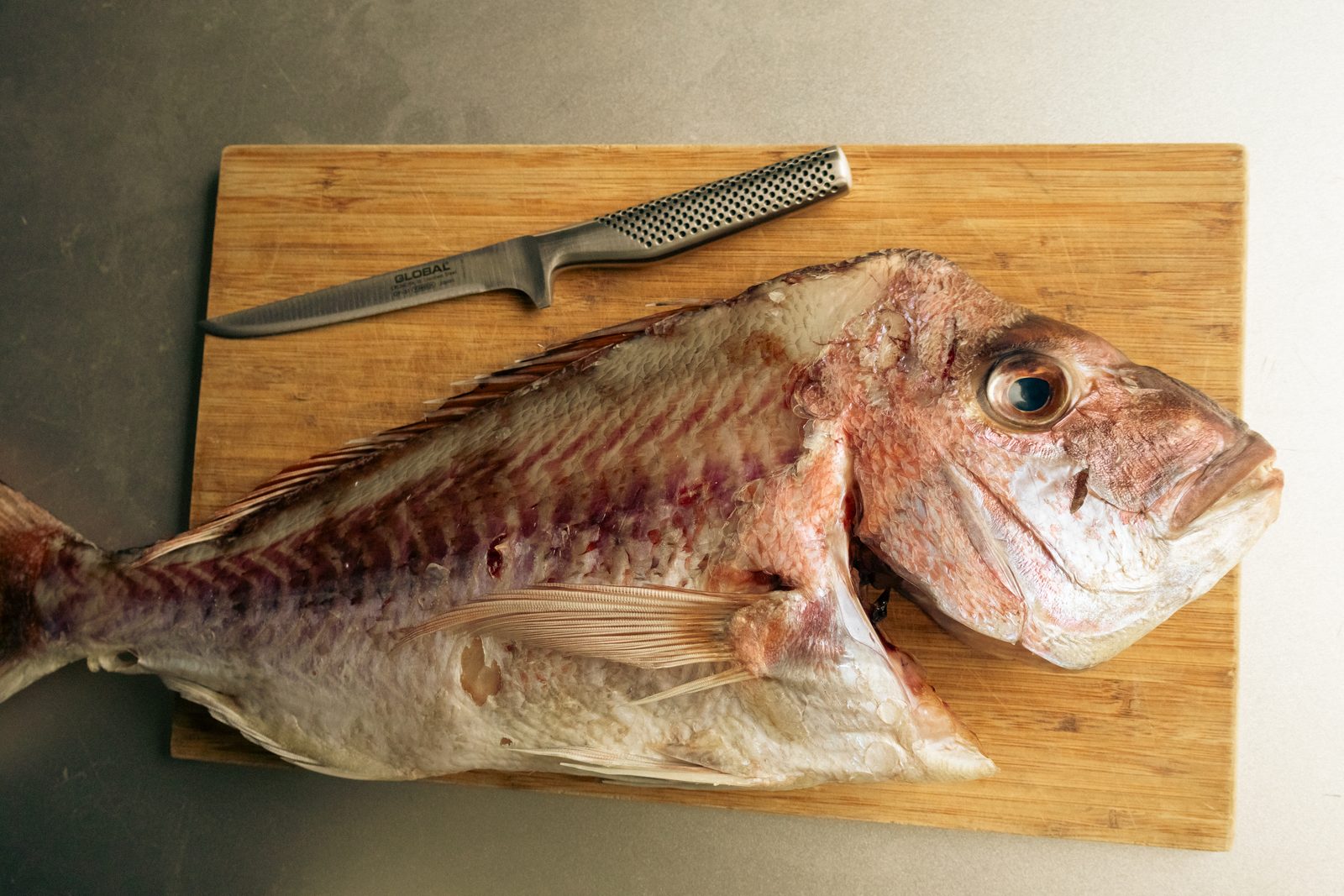
I have learnt to love fish processing. It is something that I think is important to enjoy as it makes up part of the process and lifestyle that is fishing. Having tried numerous styles and brands of knives, I have grown to appreciate a good quality blade and can feel the difference in getting the job done.
No one started their seafood journey by nailing perfect fillets. We have all “butchered” our fair share. But striving for clean cuts is something that is very worthwhile for the shelf life and texture of your fish. Poor knife work can lead to misdirected slices and blood or stomach acid spoiling flesh. The added force of a blunt knife can cause internal bruising. Scaling a fish causes a lot of damage and creates pockets for moisture to sit and become a breeding space for bacteria. Taking care with your filleting and maintaining your knives can leave you with clean fillets that present far superior and will have less risk of developing a fishy odour.
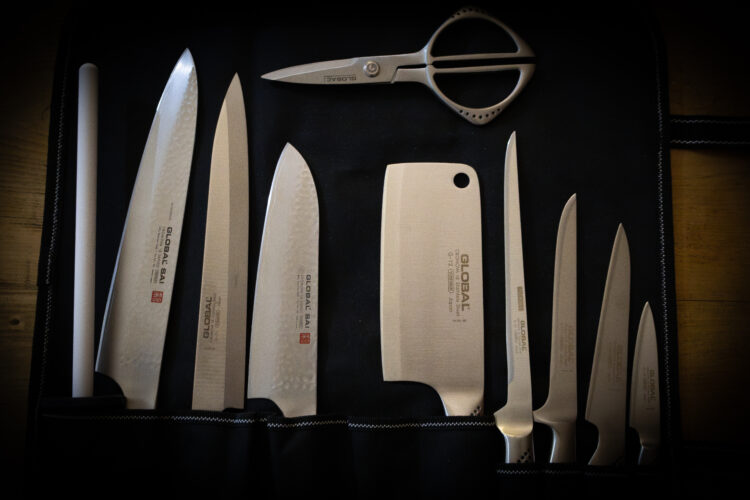
I have been using a roll of GLOBAL knives that I hand-picked for this article. I extensively researched which knives I wanted based on the species and knife work that I do regularly. I have commented on the value and purpose of each knife and ranked them based on what I think are the most important tools from 1-9.
Of course, there are no right or wrong answers to a lot of these dilemmas because we all operate differently. I have pieced together some of my experiences with experts in the seafood industry to give you a perspective that may help guide you. I highly suggest holding knives before purchasing them to get a sense of the balance in your grip.
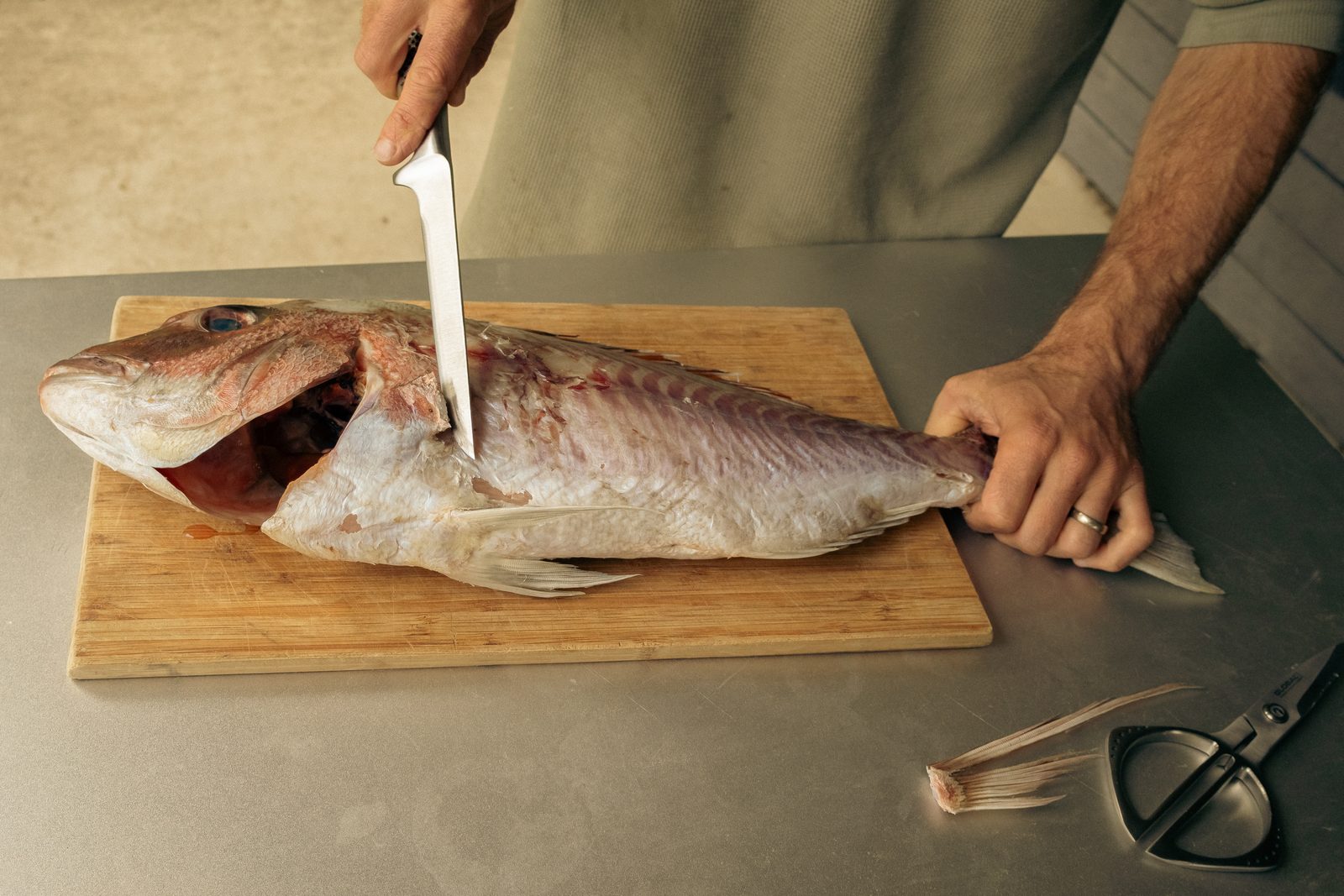
GLOBAL knives are a highly regarded manufacturer and very popular in the chefing industry. All the blades that I chose have an asymmetrical handle specifically designed for ergonomic right-handed use. Passionate home cooks would cherish a GLOBAL knife block to work with from their kitchen bench, or even just one chef’s knife as a workhorse.
In the quiver of knives that I have been using, there are two chef’s blades that are from the Sai range that use a slightly superior steel that will hold its edge for longer. The rest of the knives are all from the Classic range. The choice is a matter of affordability. The Classic knives are all extremely well-made. I wanted to be able to feel the differences and comment on which style I would recommend.
Here is the list of GLOBAL knives that I chose to test:
9cm pairing knife (GS-38)
Kitchen Shears (GKS-210)
15cm Utility knife (GS-60)
16cm Boning knife (GF-31)
19cm Santoku (Sai-03)
21cm Swedish Fillet knife (G-30)
Meat Cleaver (G-12)
25cm Yanagi sashimi knife (G-11)
25cm Cook’s knife (Sai-06)
When ranking the knives, I gave myself a little wiggle room for change based on context. It was very challenging to order even my own preferences. I considered how often it was used, whether the knife increased the amount of flesh extracted or the quality of the yield, and the versatility and proficiency. The list is personalised to how I use them. The techniques that I value have all been introduced to me in recent years by professionals who make so much sense. You might end up trying some of them for yourself. Without further ado… Here is my “seafood at home knife list”. Poke all the holes in it you like. I have reordered the list countless times, but this is my final list:
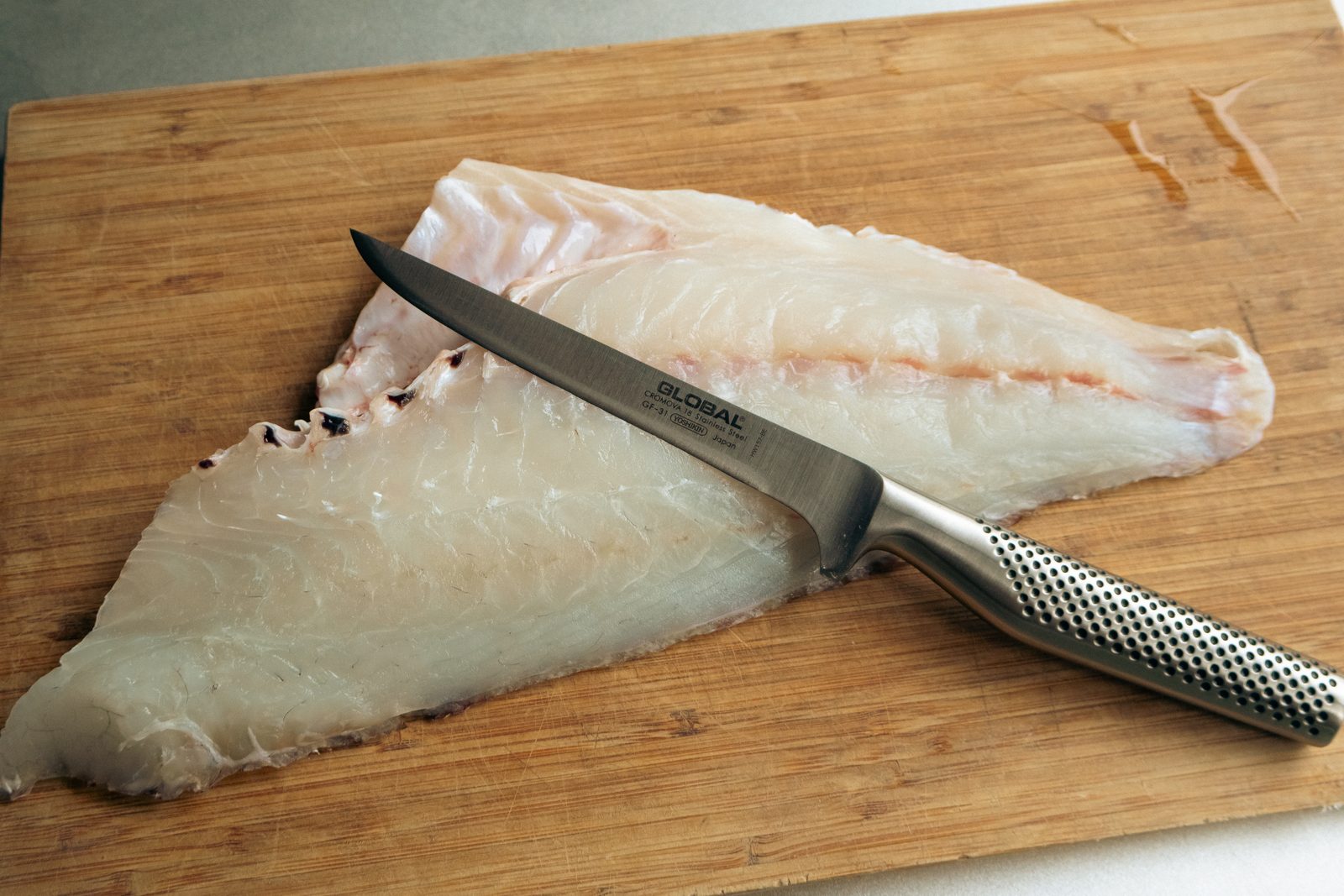
- Boning knife
The 16cm Boning knife is my go-to filleting blade. A forged straight blade that stays true when making incisions. Some smaller fish may be slightly challenging to fillet, but this thing should be able to handle most fish. I have even used this on staple snapper all the way up to filleting marlin. The stiffness in the blade brings confidence in each manipulation of the blade; you know exactly what the tip is doing. If you are used to standard flexible filleting blades, this could be something worth trying. For a long time, we have been told to make shallow cuts along the spine of the fish. This can be effective in minimising waste, but often ends in the fillet being pierced unnecessarily. The spine comes off clean, but the fillet itself is mangled. The boning knife allows you to hug the spine, make deep cuts and sweep the fish efficiently. The more cuts in your fillet, the quicker it will spoil, and it becomes challenging to create an even texture when cooking. If you are happy with the results and feel of the flexible blade, then this would be your number one choice; stick to your guns.
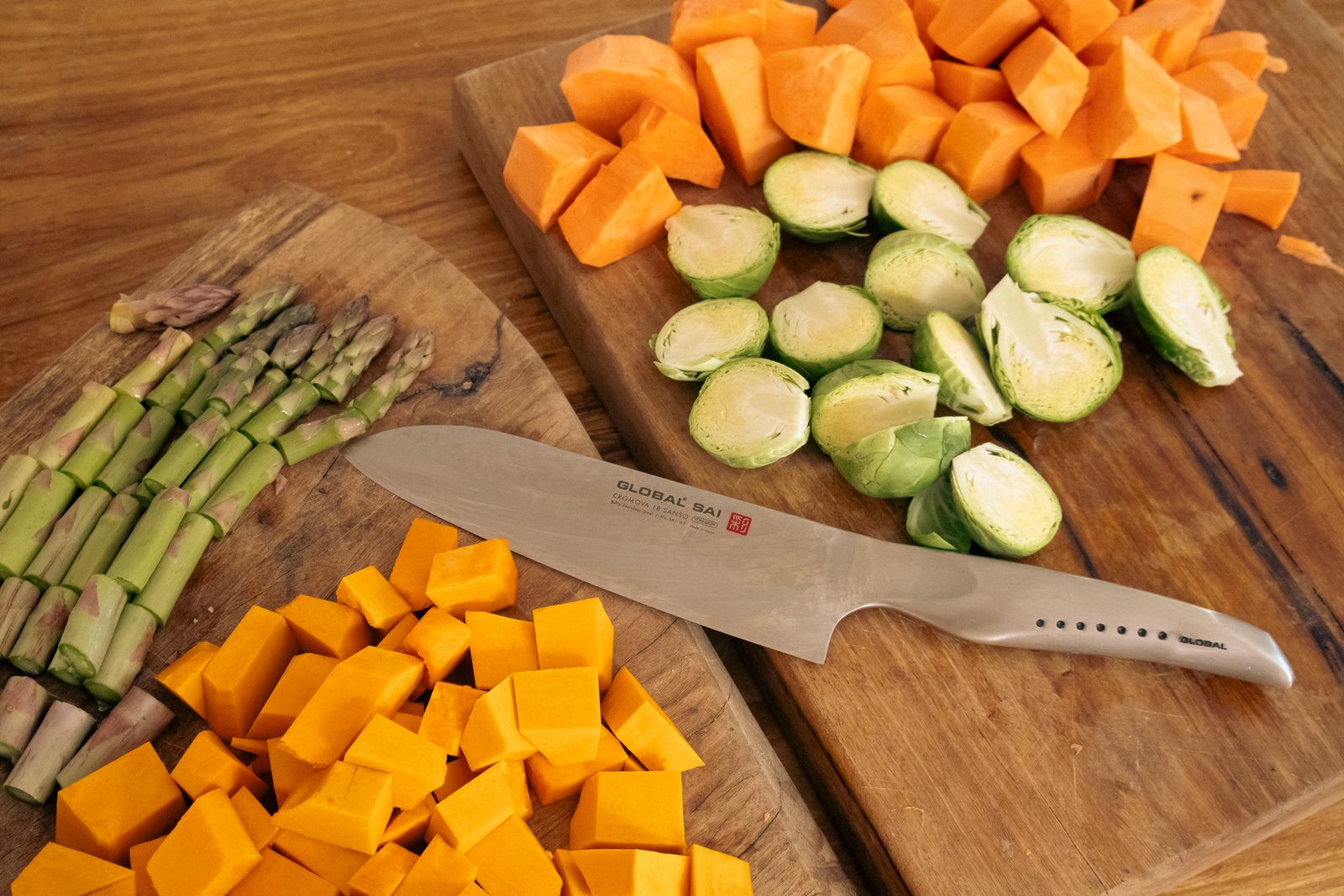
- Santoku
This is a seafood knife roll. I plan on having sides, sauces and marinades with my pesce, so a chef’s knife is second from the top on my list. Besides, as a recreational angler, I cook at home more than I fillet fish. So this should really be the first thing to invest in quality steel.
The Santoku blade is a traditional Japanese style that is regarded for its versatility. Known for superior slicing, dicing and mincing, it has the ‘3 virtues’ all wrapped up. I elevated the 19cm Santoku to the 25cm Chef’s knife for a number of reasons. It is light, yet robust enough to take on most tasks. Cut garlic and herbs, manage larger veggies and even portion meat. I prefer to chop with other knives for specific purposes during a cook-up, but this knife makes an appearance in every cook-up.
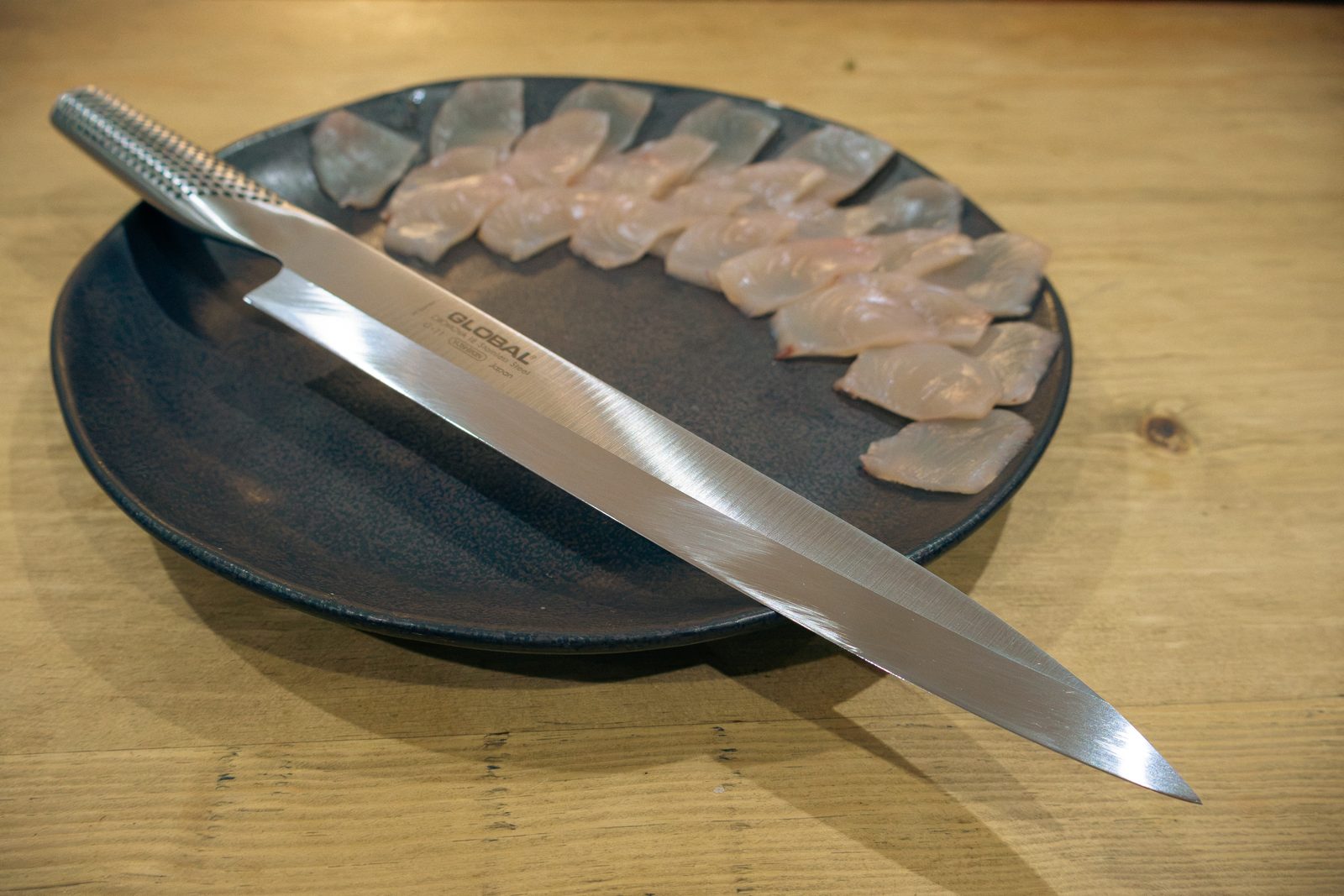
- Yanagi
For some, this knife is a luxury item and unnecessary. This is my most valuable and respected knife in the quiver. It only comes out to cut sashimi. Personally, I cannot taste the difference between pieces of raw fish if I cut it with the Santoku/cook’s knife or the yanagi. But the Japanese would be laughing at the prospect of such blasphemy. It is an art form, and I love the romance of using traditional techniques. The GLOBAL Yanagi knife makes slicing sashimi an absolute pleasure, meticulously designed and manufactured.
The blade is 25cm, which is long, but mid-length for a sashimi blade. The whole idea is that a single stroke of the face liberates the slice of sashimi from the loin. A sawing action isn’t tolerated in Japanese cuisine, as the texture of the fish is altered.
The Yanagi knife has a single bevel. Which means one completely flat slide and the other has an angled edge. The flat face is on the left-hand side of my model when cutting, due to the specialised right-handed grip. Minimal downward pressure is applied when cutting. The sharpness of the blade and length of the knife allow the person preparing the fish to not squash the fish and alter the chemistry of the cut.
I love cutting Sashimi, and having a purpose-built knife is worth it for me. It makes me enjoy the process that extra bit more. If you wanted to have a knife that was good at this job but had versatility, I would suggest a carving blade that is also great for meats.
- Utility knife
The utility knife comes out for almost every cook-up as well as the Santoku. It feels so comfortable in my hand. The shorter the blade, the more intricate the detail. I have elevated the 15cm utility to the 9cm pairing blade because it covers more ground. I am happy cutting herbs and garlic with this knife; to me, a pairing knife doesn’t save any extra time or fatigue. The utility knife is significant to me when processing fish. It is a great knife for trimming away offcuts or waste.
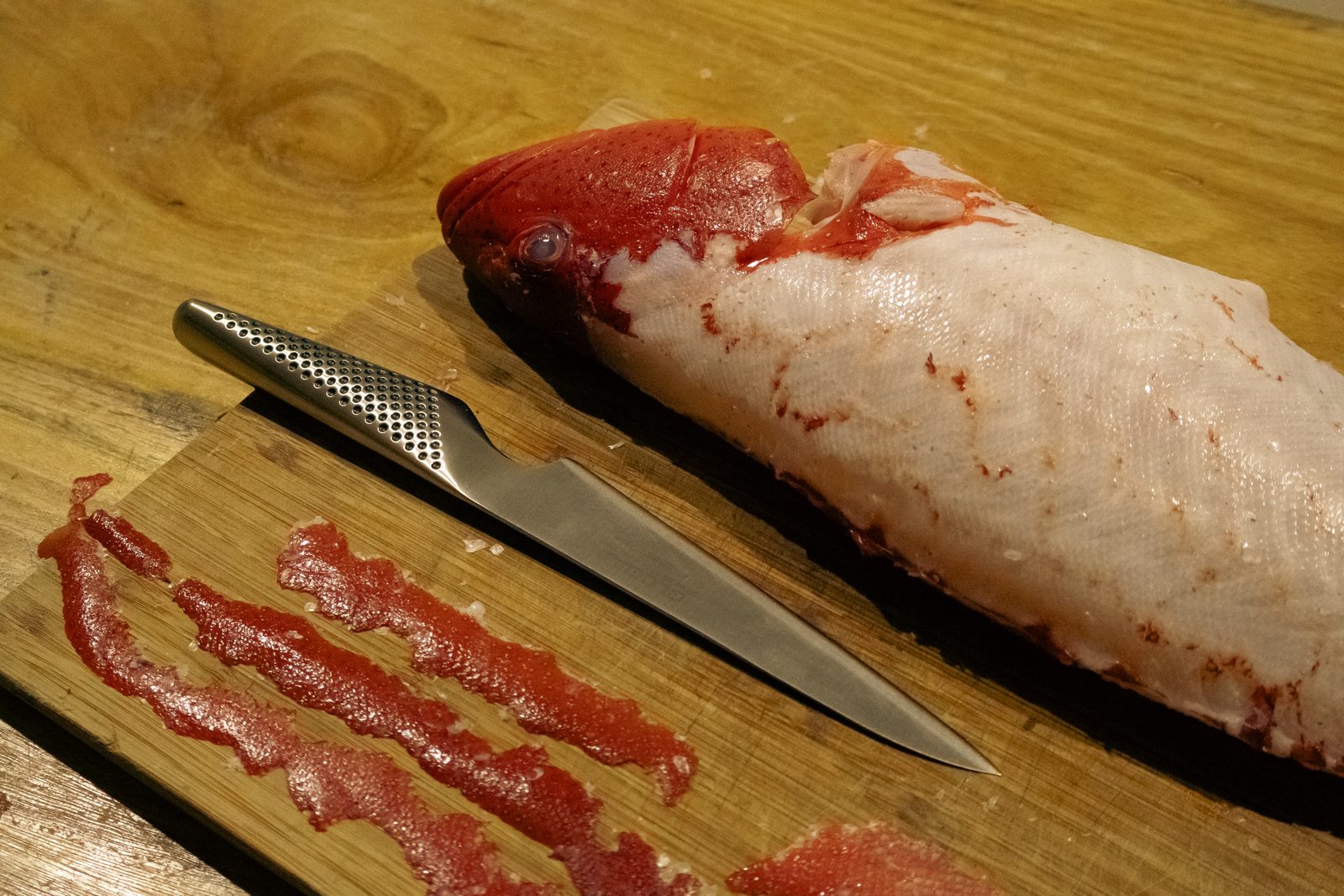
This is my go-to knife for Sukibiki, a Japanese cut scaling technique. Basically, removing the scales without taking off the skin. This is a very delicate procedure, and the right knife makes a huge difference. I was looking for the lightest possible blade with a bit of length, very sharp and a straight edge. Angling the knife upwards towards the skin, then slice up and down, north to south, without much forward pressure. If you are doing it correctly, the scales usually come off in beautiful sheets. It may be worth watching a tutorial on this to get the full picture. If you are doing multiple fish or a larger model and your blade is heavier, your hand will get cramps. I use this with almost all of my fish before they go in the dry ager. The scales seem to create too much of a barrier between the atmosphere and flesh in the dry ager. I have experienced superior taste and textural results using Sukibiki. Plus, the scales get very hard after ageing and make processing difficult. Cut scaling and drying the skin is the best way to prepare fish for crispy skin dishes.
- Swedish Fillet knife
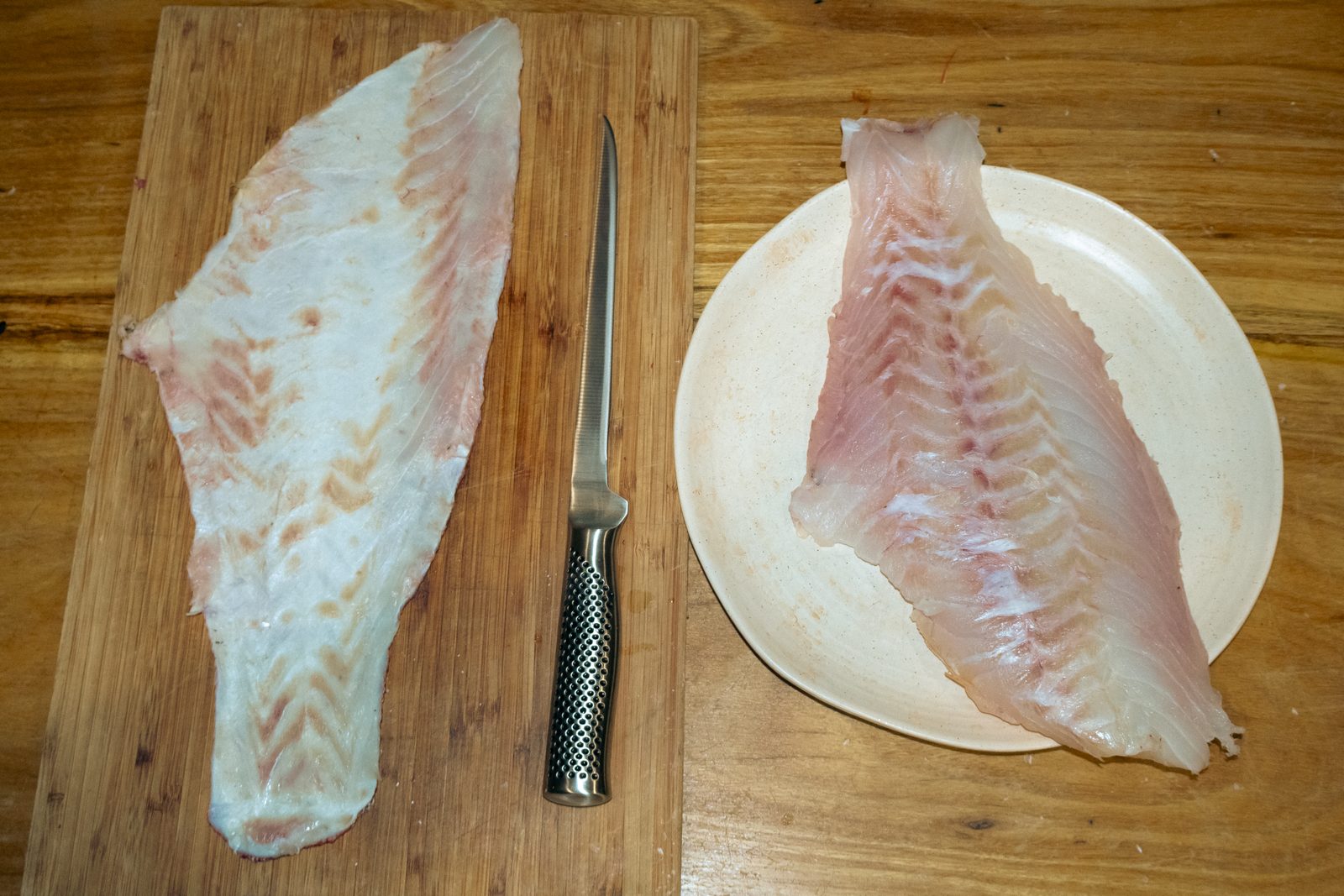
You may be wondering why I have put this blade in at number 5 after ragging on it earlier. I repositioned this blade numerous times. But I settled for this potion for two main reasons. I use this for skinning fish. The flexibility is a necessity for skinning a stiff blade, which will not be able to hug the tension created by the skin and will pierce it instead. The flexibility allows for a long sweeping motion to take the skin off in one go. Skinning isn’t something that I am doing too much these days, which is why it was difficult to place this blade so high. I hang most of my fish in the dry ager, and leaving the skin on protects the flesh.
The reason that I love this knife is that it increases the amount of fish extracted in a single yield. I use the flexibility to my advantage and hug the rib cage as tight as possible to keep the flesh below the ribs connected to the main fillet. With a boning knife, this always ends in waste. On a larger fish, a substantial amount of fat-dense meat is wasted. GLOBAL also makes a standard flexible filleting blade. I went with the Swedish model because the face is about half the surface area. I only use it for skinning and the rib cage, so the narrow face makes it easier to get into tight spaces. This will be my primary filleting blade for smaller fish, for example, filleting flathead, where you angle the blade up from the wing; a bit of give in the blade helps.
This filleting knife would probably go down the list if I mentioned I had the boning tweezers from GLOBAL. These help to minimise waste again, they take up no room, and they preserve the shape of your fillet. By pulling on the pin bones, you don’t need to cut the strip of flesh around the bones out altogether. This is a tool that I think all anglers should invest in.
- Kitchen Shears
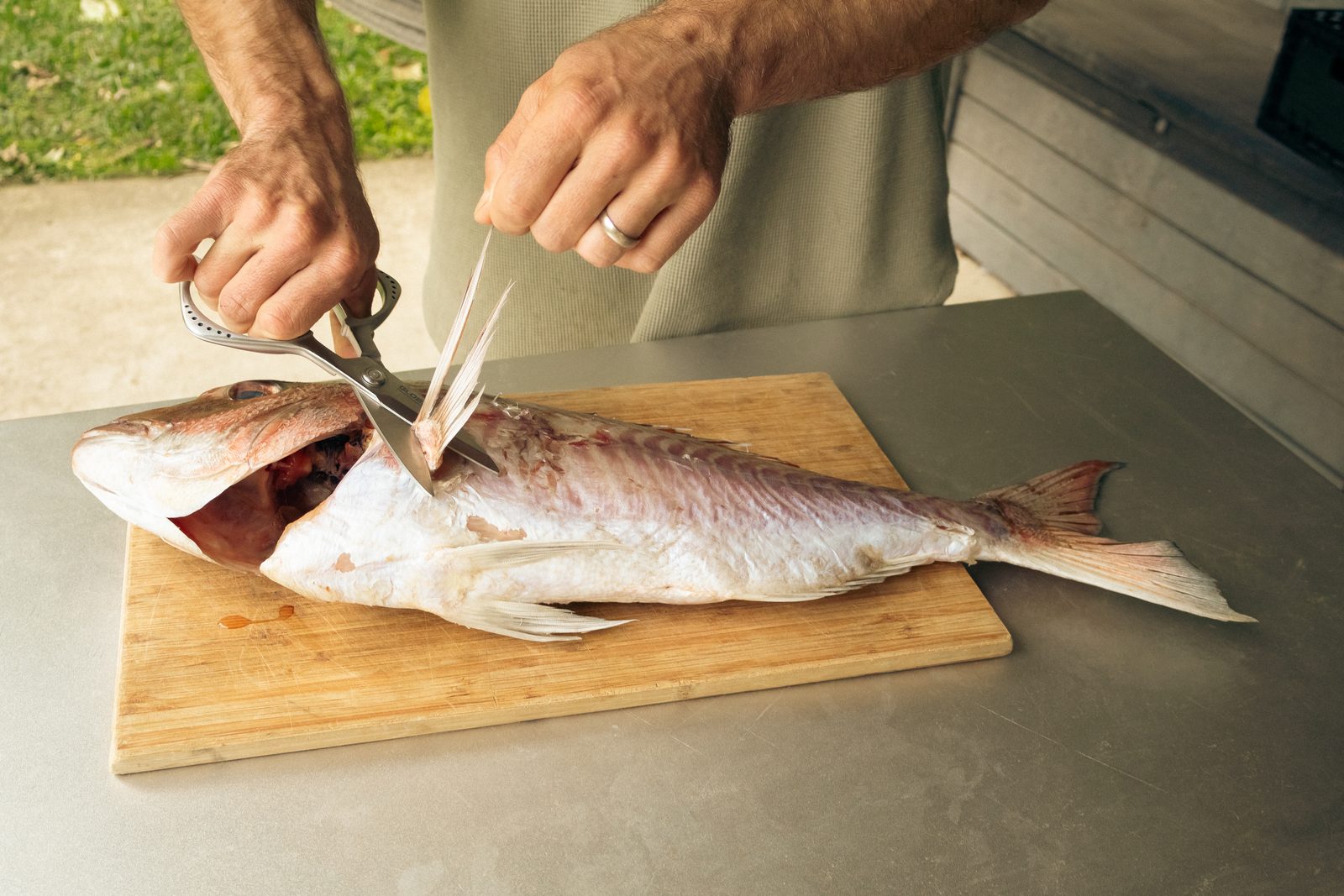
I use the shears all of the time. They are really strong and can cut through bone and fins far more easily than a knife. Which makes sense, you have sustained pressure operating from both sides of the desired cut. I trim the dorsal and pectoral fins before practising Sukibiki with the scale removal. I also sometimes opt for the shears when cutting through the rib cage of a fish to be able to take the whole fillet.
I also take them out fishing to help dispatch the fish. I use them to cut the gills. Very quick and effective means for getting the blood pumping out of the flesh.
- Meat Cleaver
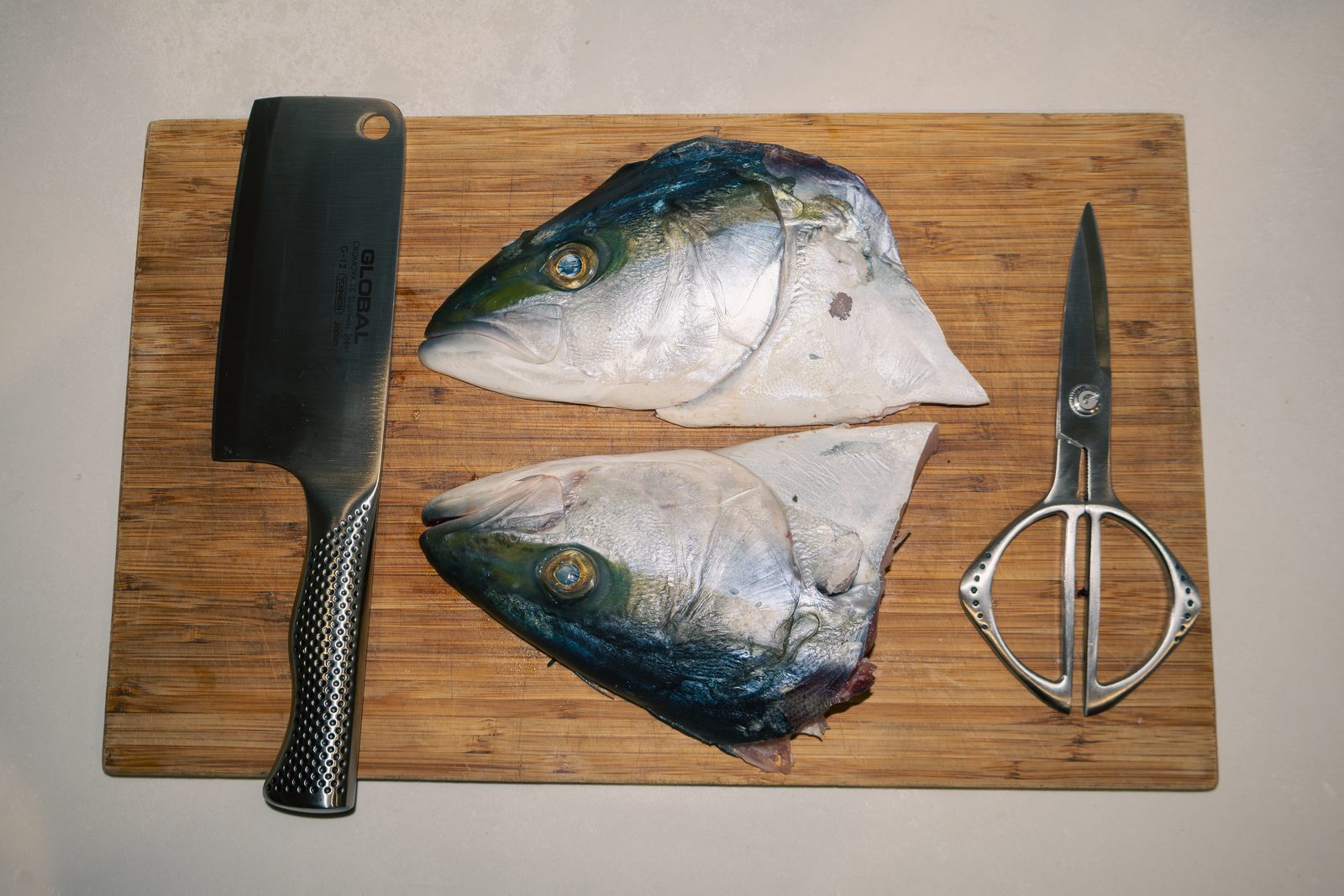
This knife probably gets the least use out of all the tools. However, its purpose elevates it above the Cook’s knife because it helps me to minimise waste. There is so much meat in the head. You can cook the heads whole, but on larger fish such as tuna and kingfish, the meat is easily accessible if the head is split in half. I use the cleaver and its heavy set shoulder to lean on the heads and butterfly them through force. Cooked over the BBQ, it is a dream result. The shears can also help to make this happen. I also choose to grab the cleaver if I am making a classic pumpkin soup and want my prep time to be halved.
- Cook’s knife
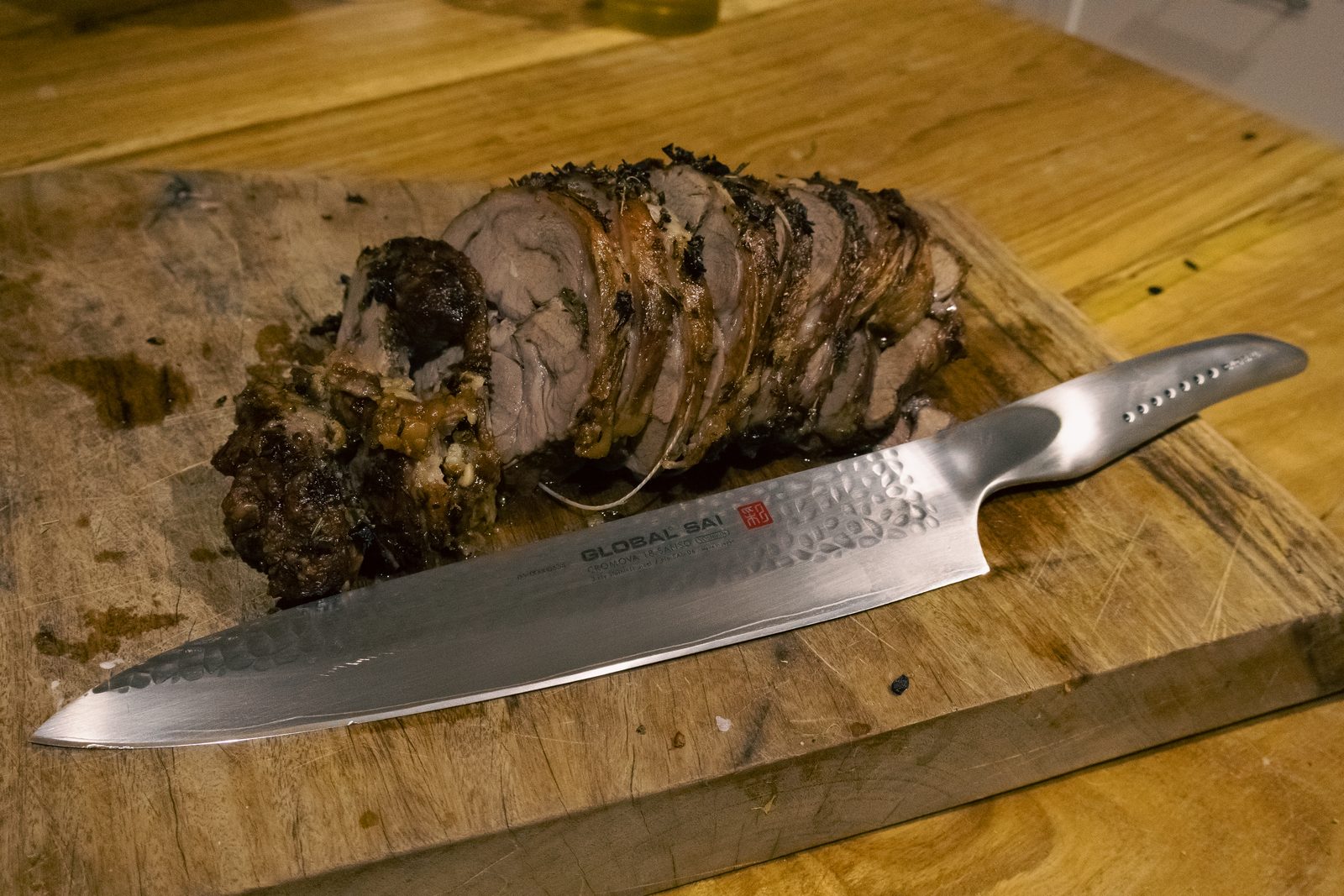
One aspect of the 25cm cook’s knife is that I have seen some chefs use it as their primary filleting knife. It has the stiffness of the boning knife, and they are familiar with using it to cut everything else. So it makes sense that they use it on fish as well. Plus, unlike the Santoku, the cook’s knife has a pointed tip as opposed to a rounded one.
This is a great knife. The Sai range has enhanced steel, with benefits noticeable after extended use, where slightly less sharpening is required. This is a great knife for larger vegetables and portioning and could also slide in to replace a sashimi knife if you really wanted to streamline your top drawer. You could also choose this over the Santoku knife if you didn’t mind the extra weight for day-to-day cutting. It is pretty big, though and as a result of having other options, it doesn’t get as much use.
- Pairing knife
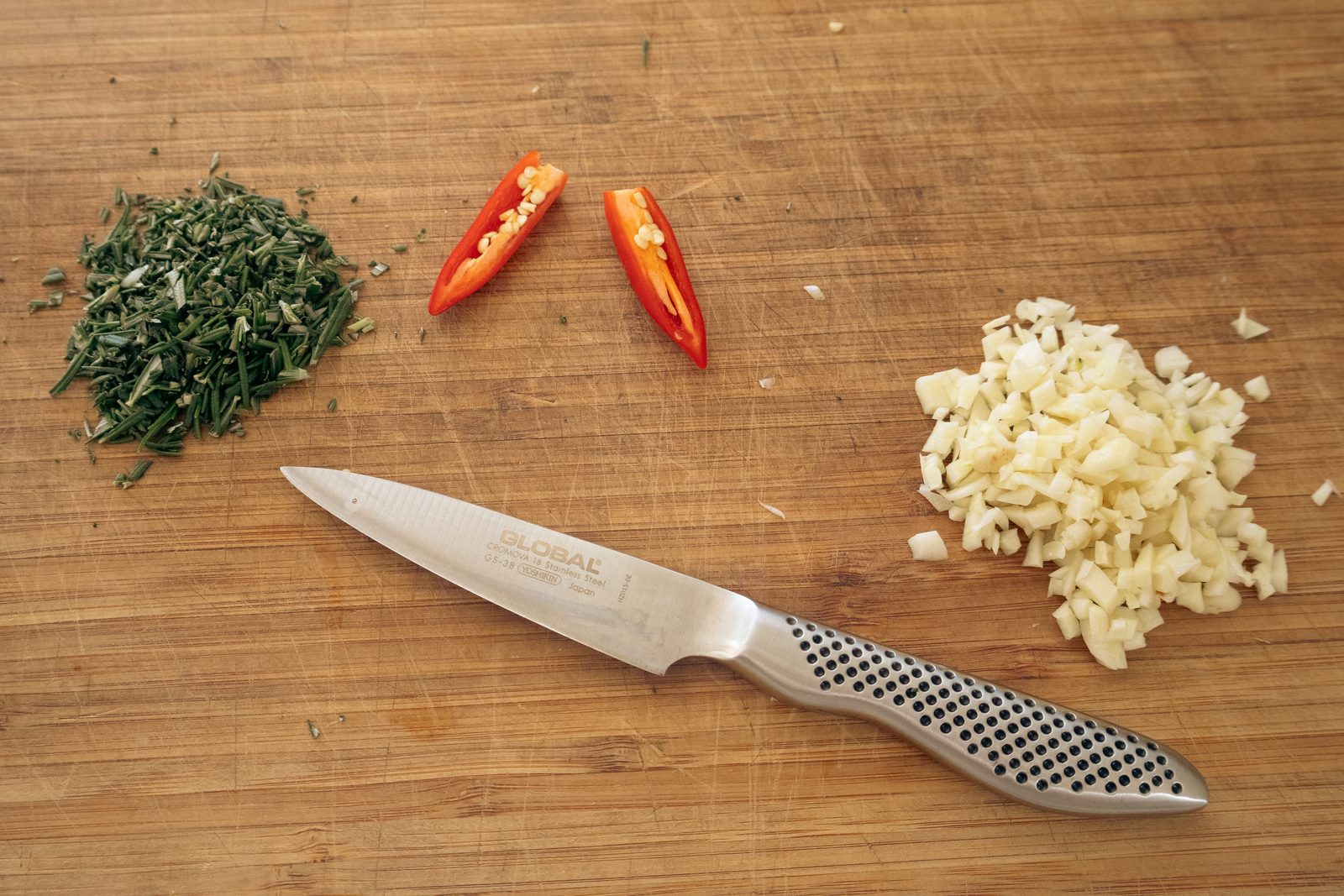
This is a great knife to have. But in my opinion, unless you are working in a restaurant, you can get away with using other knives to replace the pairing knife. It works better than anything for intricate detailing, mincing garlic, herbs and garnishes. But the utility isn’t far off; it has more versatility. If you can get it, get it. I love using this knife, but it isn’t essential. Plus, cooking at home, plating, and presentation may not be as important as serving paying customers. I still try my best…
- Ceramic sharpening rod
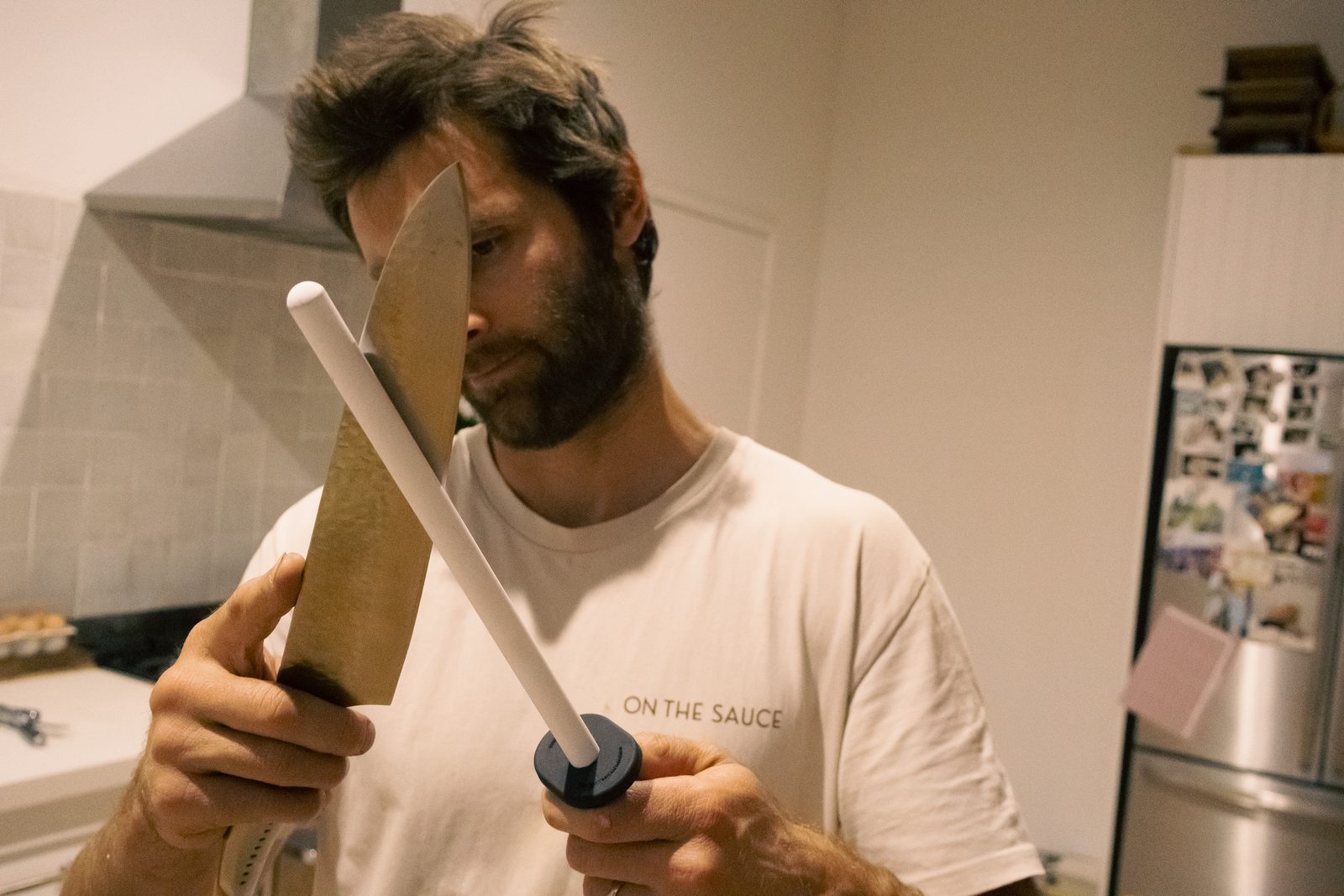
Plain and simple, this wasn’t mentioned initially in the list of knives I was ranking. In my opinion, whether you have 1 knife or 20, there is absolutely no point in investing in a quality blade if you do not have the tools to look after it. I use the ceramic rod regularly for touch-ups, then I will take an evening to pop a beer and sit by the wet stones for comprehensive maintenance. Honestly, some people aren’t prepared to do this work; in that case, you may be better off going cheaper and replacing them, not the most ethical or satisfying option. These heirloom knives will last a lifetime, but will eventually cut like a spoon unless you care for them.
I am glad to have access to all of these knives stored in a 9-sleeve GLOBAL knife roll. They all get used and serve a purpose. I hope that this article helped you understand what knives might be best suited to your styles of fishing, filleting processes and cooking arrangements. I’d love to see other people’s lists with the same knives. This was a very fun article to write and think about. Having good-quality knives makes you think about the work you are conducting, making it all the more enjoyable.