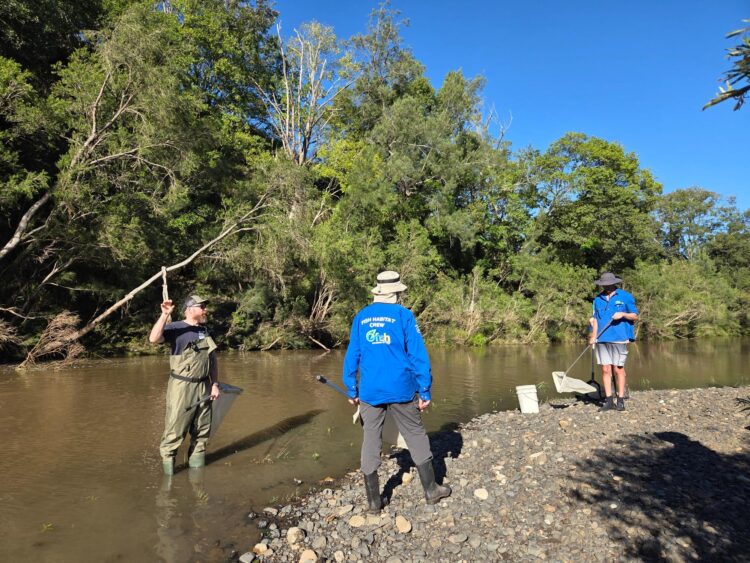
THERE was a time when the Upper Richmond River was one of the last great strongholds of the Eastern freshwater cod. These powerful native predators once patrolled this river’s deep pools and timber snags. Today they survive only in a handful of carefully protected waterways. While the Richmond population has largely disappeared, healthy populations still hold on in neighbouring rivers like the Clarence.
It offers a glimpse of the kind of fishing these waterways were once capable of producing and serves as a reminder that great fishing rivers don’t stay that way by accident. To understand why, it’s worthwhile starting where every great river begins. For the Richmond, this is in the shadows of the Border Ranges where whipbirds can be heard calling from pockets of subtropical rainforest.
Here, where the Richmond River begins its journey to the sea, the future of the entire catchment is shaped. Every tree, every stream and every healthy riverbank influences the fish that will eventually swim downstream. It was the perfect setting for the OzFish Experience Campout in Rukenvale. This was the fifth of ten campouts that recently brought together members from five OzFish chapters across NSW for a weekend of learning, restoration and connection. The aim was simple: give anglers practical skills they could take home to improve their own waterways. After almost five weeks of rain, the sun finally broke through, creating the perfect opportunity for members facing similar challenges in different catchments to swap ideas, learn from experts and develop plans for future fish habitat restoration projects.
Friday night under the stars
As members arrived, the campfire quickly became the heart of the camp. For many, it was their first opportunity to meet like-minded anglers who were tackling similar restoration challenges in different parts of the state. Stories of local rivers, successful projects and lessons learned flowed as easily as the conversations, while a few rounds of OzFish Trivia added some friendly competition with questions on carp, fishing litter and water quality. Before the weekend’s workshops had even begun, ideas were already being shared, friendships were forming and members were discovering they weren’t alone in their efforts to improve fish habitat.
“These campouts are about bringing people together to learn from one another and build confidence to take action in their own communities,” said OzFish Project Manager Zoe White.
“Whether it’s restoring habitat, monitoring river health or simply meeting people who share the same passion for fishing, everyone started and finished the weekend with something valuable to take home”.
Getting our hands dirty
The following morning began with local Githabul man David Welsh sharing his perspectives on waterways, environmental stewardship and the deep cultural connections between people and Country. His stories gave everyone a powerful reminder that caring for our fish and rivers has been part of this landscape for countless generations, setting the tone for a day focused on giving something back to the Richmond River.
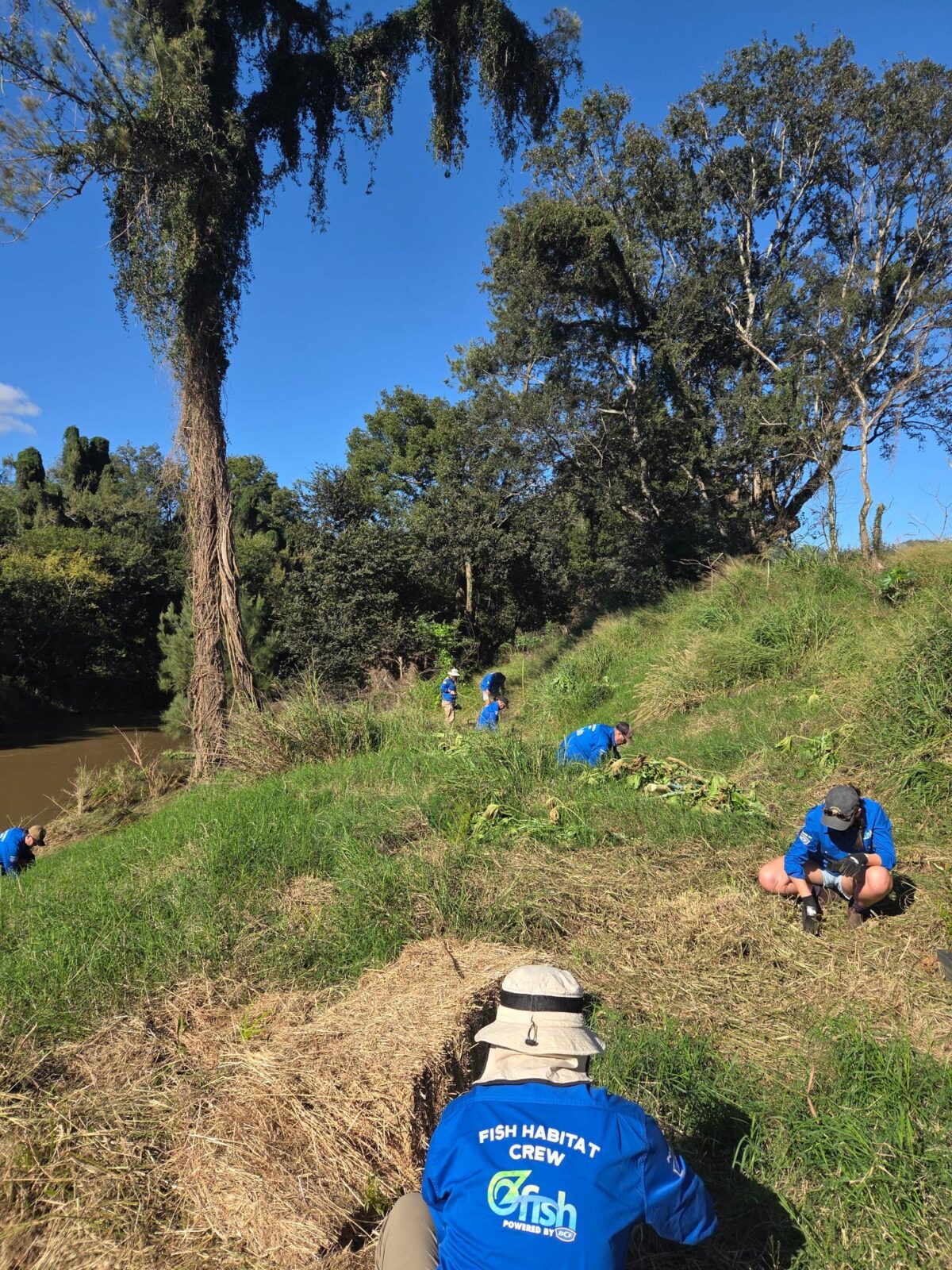
It wasn’t long before conversation turned into action. Armed with gloves and spades, members spread out along the riverbank to plant 300 native trees and shrubs in the upper reaches of the Richmond River. While small today, these plants will grow to stabilise riverbanks, reduce erosion, provide shade and create healthier habitat for native fish and other aquatic life. The planting was also a chance to learn from the great outdoor classroom. As they worked, members learned practical skills they could take home, from identifying invasive weeds to planning riparian restoration projects and selecting suitable native species. It reinforced one of the weekend’s biggest lessons, which was that restoring fish habitat doesn’t require specialist qualifications, just the right knowledge, willing hands and a community prepared to get involved.
Waterbugs and what they tell us
Members also had the chance to discover what some fish eat for their lunch. Long before Australian Bass and Eastern Cod grow large enough to chase lures, they spend their lives hunting tiny aquatic invertebrates among rocks, logs and streamside vegetation. If these waterbugs disappear, the fish that depend on them soon follow. Dr Brendan Cox from River Ecology Australia introduced the group to the science of monitoring river health, explaining how water quality testing and aquatic invertebrates can give us an insight into what’s happening beneath the surface. Together, they can tell us whether a waterway is thriving or under pressure, while also helping measure the long-term success of restoration projects.
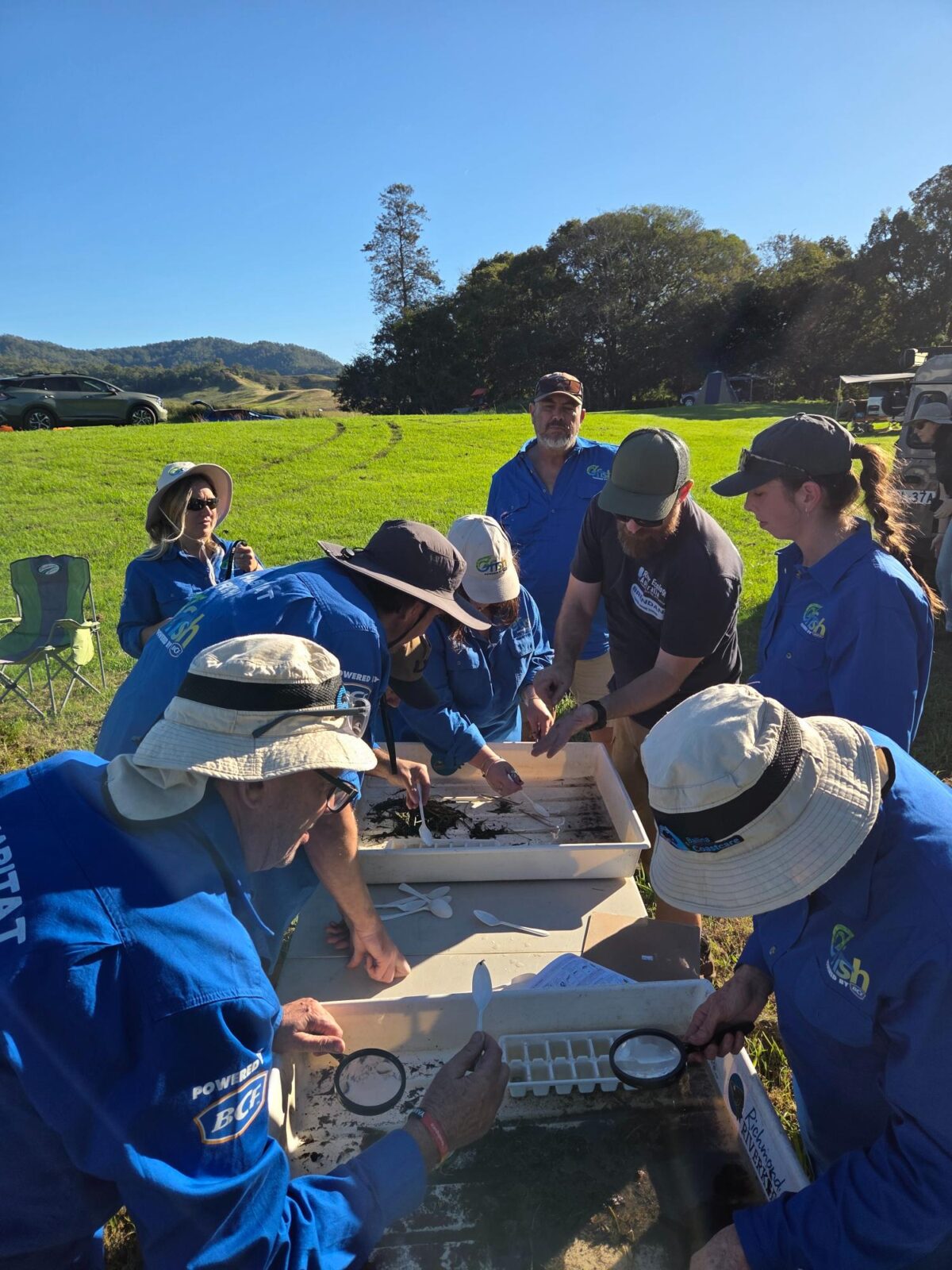
The lesson quickly moved from theory to practice as members stepped into the river with nets and trays to learn professional waterbug sampling techniques. Among their discoveries were caddisfly larvae, marsh frog tadpoles, freshwater shrimp and boat bugs, each playing an important role in the freshwater food web and helping support iconic native fish species.
“Waterbugs are one of the best indicators of river health because they provide a picture of long-term environmental conditions and are a fantastic way to involve the community in monitoring waterways,” said OzFish Project Manager Zoe White.
“Getting everyone into the water and showing them what lies beneath the surface helps build a much deeper understanding of how these ecosystems function and what they can do to help monitor them.”
After spending the afternoon discovering what fish eat, it was only fitting to finish the day chasing a few ourselves thanks to a friendly Carp fishing challenge that rounded out the weekend’s activities.
Rainforest walks and river stories
For many freshwater fishers, the best Bass and Cod water begins where the bitumen ends. The final walk of the weekend took us through a pocket of subtropical rainforest, which showed everyone why fish love being off the beaten track. Guided by local plant expert Paul Daley, members explored the native trees and shrubs that help hold riverbanks together while learning to identify invasive species that can unravel an entire waterway.
It quickly became clear that the fish caught downstream owe much of their success to what happens upstream. Fallen timber creates structure, overhanging vegetation drops insects onto the water, shaded streams stay cooler through summer and healthy riverbanks stop sediment smothering the gravel and rocky habitat where aquatic life thrives. It’s a reminder that every great fishing river starts long before the first cast and the health of Australia’s freshwater fisheries is written in its headwaters, one tree at a time.
More than a weekend away
Every fisher has a favourite stretch of river they hope never changes. The reality is those places only stay productive when someone is willing to look after them. As camp wrapped up, members headed home with far more than muddy boots and good memories. They left with the skills to rebuild riverbanks, monitor water quality and recognise the signs of a healthy fishery before fish numbers begin to decline. Weekends like these aren’t really about planting 300 trees or catching Carp. They’re about understanding what makes great fishing possible in the first place. Healthy rivers are built from healthy forests, stable banks, clean water, thriving insect life and communities prepared to roll up their sleeves.
The Eastern freshwater cod reminds us what can happen when those ingredients are lost. But rivers can recover when people decide they’re worth fighting for. That’s what the OzFish Experience Campouts are really about. Giving everyday anglers the knowledge and confidence to restore the habitats that produce tomorrow’s bass, cod and every other fish we love to catch. Because the best fishing stories don’t begin with the fish. They begin with the river.