THERE are many ways to configure a boat and one hull can take many forms. There are centre consoles, side consoles, tiller steer, twin console, buddy hard top enclosed and more. Each one has a purpose and each one has a following among boaties who find that particular configuration suits their needs and purposes.
Let’s focus on two popular boat configurations: Side consoles and centre consoles. Which one is best and why?
The idea came about while reviewing two boats from popular Sydney-based manufacturer, Oceanworx. Instead of another standard old boat test, Oceanworx’s Derek Rodway suggested a story comparing the pros and cons of each configuration. So, let’s start by looking at side consoles.
Side Consoles
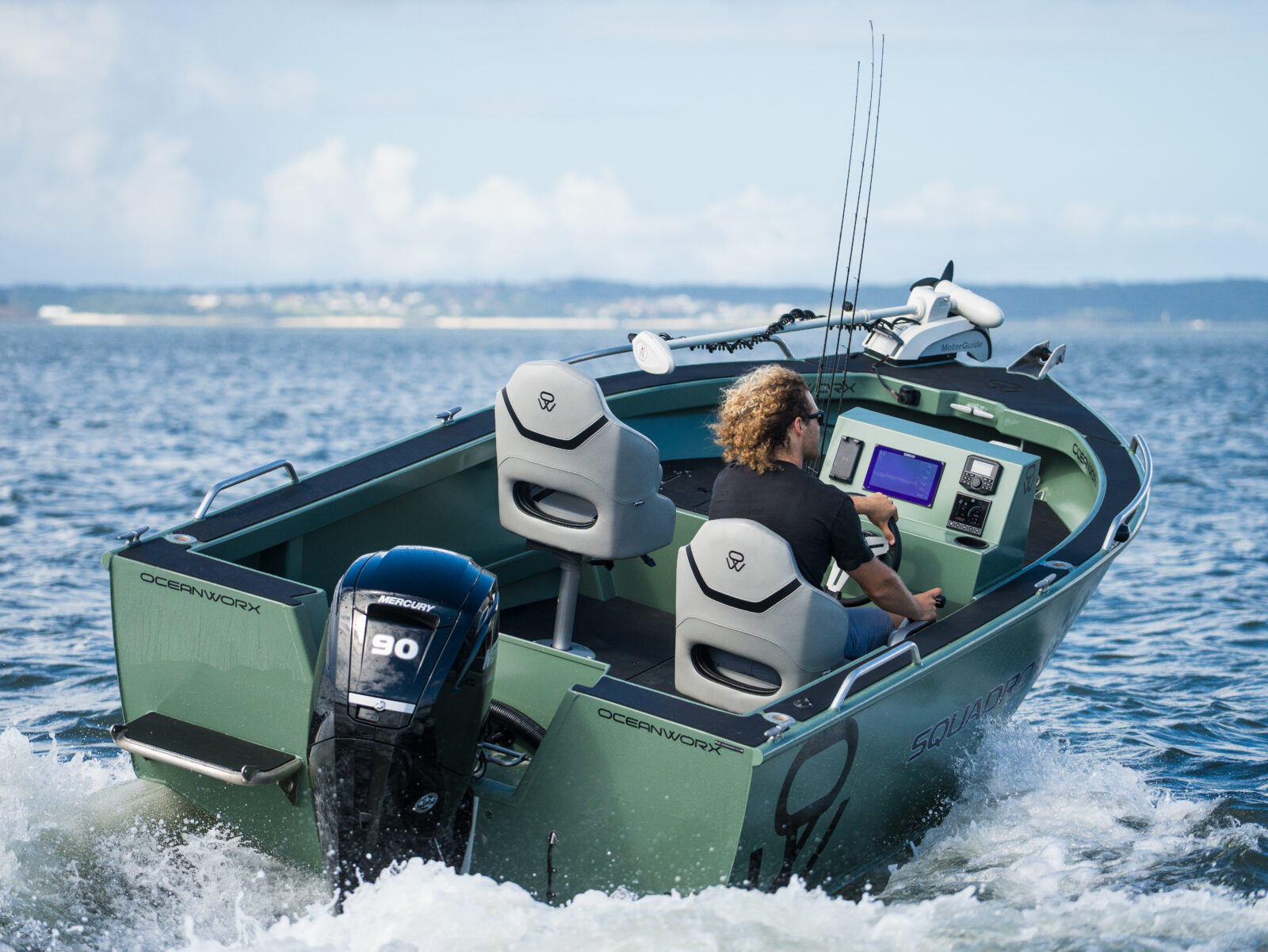
Side consoles have become more and more popular over the past 10 or 15 years. Side consoles suit anyone who wants to optimise space in a small boat. They’re ideal for freshwater, estuary and inshore boats. Most consoles in this configuration are kept relatively compact and being positioned on the side of the boat, allow for ample space and movement. If you really value space, other than a tiller steer, which aren’t always practical, this configuration is your best option. And unlike a tiller steer, you still have a small console to attach sounders, marine radios, gauges, switches etc.
Of course a console, whether side or centre, is more than a place to fix accessories. The side console offers protection from the wind and spray and something to grab in rough seas.
Another bonus with the side console is the passenger seating. The additional space often allows pedestal seating next to the driver. Many boats allow the pedestal seats to be moved around depending on your preference. On the flip side, some boaties find having pedestal seats positioned in the middle of the boat impedes on fishing space. But passengers have to sit somewhere and these seats can be removed if you don’t have any passengers.
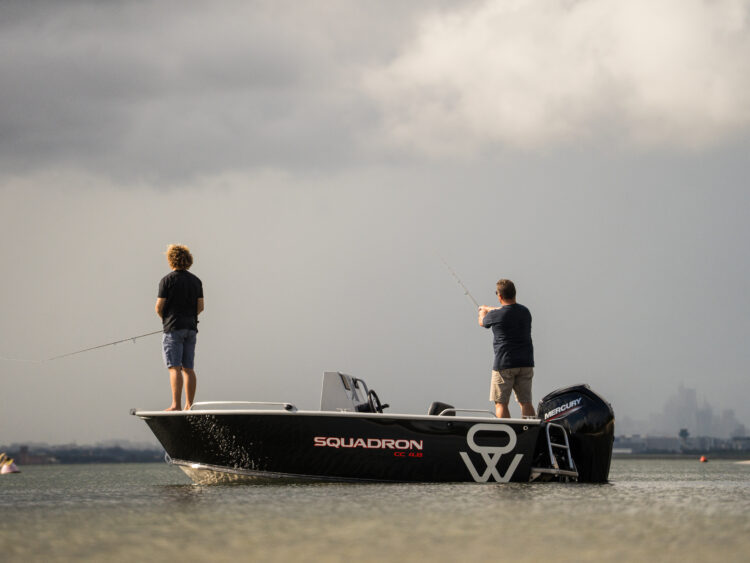
Are there any disadvantages to a side console? Personally, I find being in a low seated position isn’t as comfortable when heading offshore in rougher conditions and the position of a side console often means you wear some spray. Of course, this depends on the boat. I stayed nice and dry in the Squadron 4.8 side console and felt quite comfortable at speed through the chop on Botany Bay.
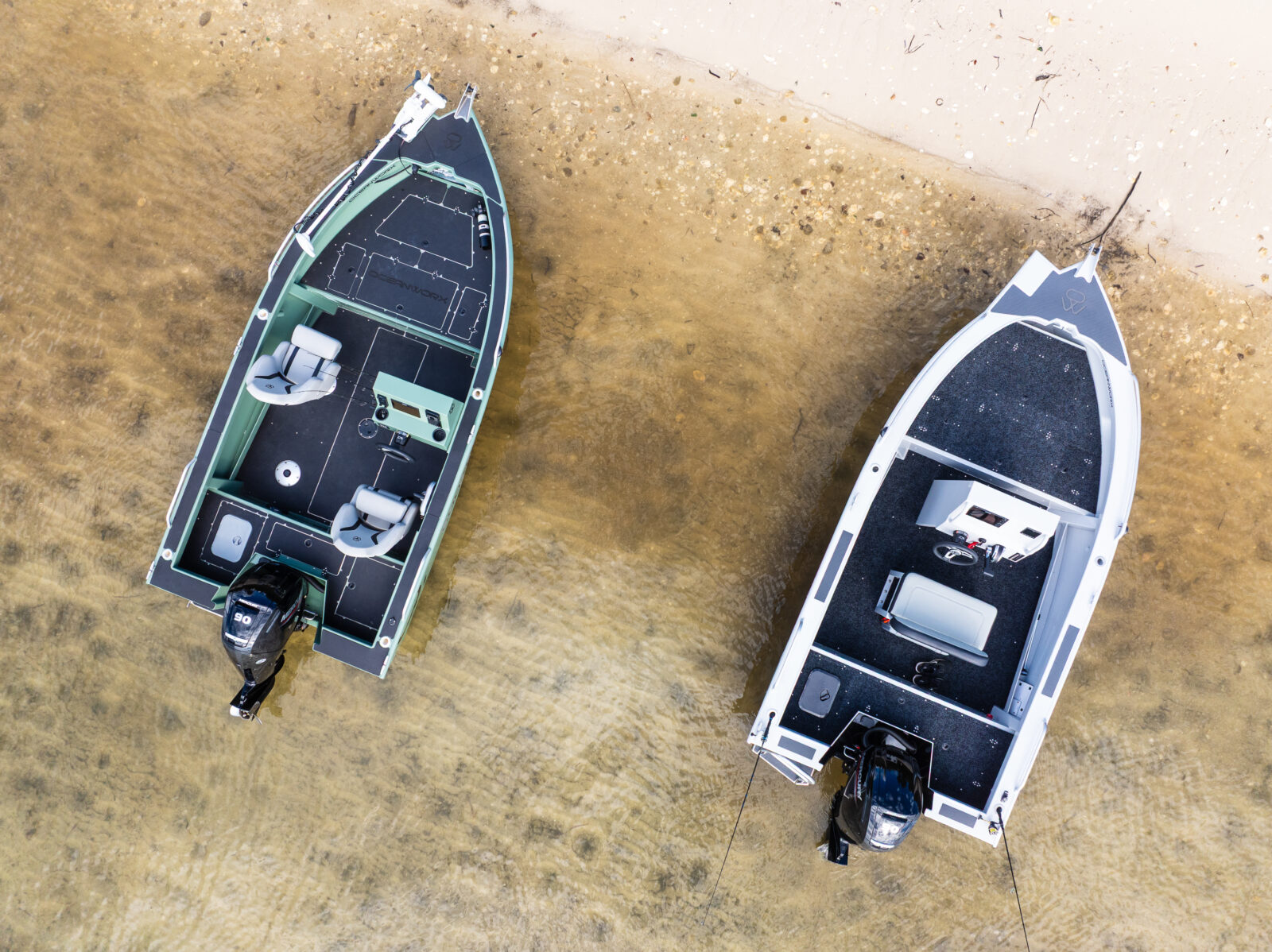
I also find the lower seated position doesn’t offer as much visibility as a standing position. That said, it’s still far better visibility than a tiller steer. Plus, in the example of this Oceanworx Squadron, it has a compact console without a windscreen and visibility is better than usual.
The squadron was also balanced well and remained level and stable while operating solo and being seated in the side position.
Centre console
This Centre Console Squadron we tested was new on the water and Samson Rodway from Oceanworx was yet to give it a run. I was keen to see his reaction as someone who designs the boats and has spent endless hours in the side console version, not to mention plenty of time spent refining these models on and off the water. Samson was impressed and looked like a kid in a candy store taking it for a burn around the lower Georges River.
Before we go into too many details about this model, let’s explore some pros and cons about centre consoles.
I admit to being biased here. I really love centre consoles and have owned a few. They’re not perfect, however, and it’s worth looking at why.
Centre consoles still have loads of space. Technically, if the consoles themselves are similar size, the floor space between a centre and side console should be the same. However, having the console placed in the middle of the boat does impede on valuable space and more than often, the consoles are larger and definitely taller. Centre consoles also don’t have as much passenger space. Passengers can stand or squeeze next to the driver behind the console or sit at the rear casting platform. They could also sit on the front casting platform, but unlike side consoles, they typically don’t have pedestal seating.
While passenger and overall space isn’t as good as a side console, centre consoles still have many benefits. I find the taller console and slightly elevated seated position to offer better overall visibility and protection from the elements. It also offers better protection from spray that usually misses the centre of the boat but can reach the sides. You can also easily see around at other boats. And being elevated, it makes it easier to spot fish or flocks of birds. Many centre consoles, including the Squadron, offer a cushioned ice box seat. It’s a great use of space and also allows you to chose between an elevated seated position or a standing position. I personally prefer to stand when driving in larger seas as it’s far more comfortable. It’s also useful on busy waterways when visibility is important for safety.
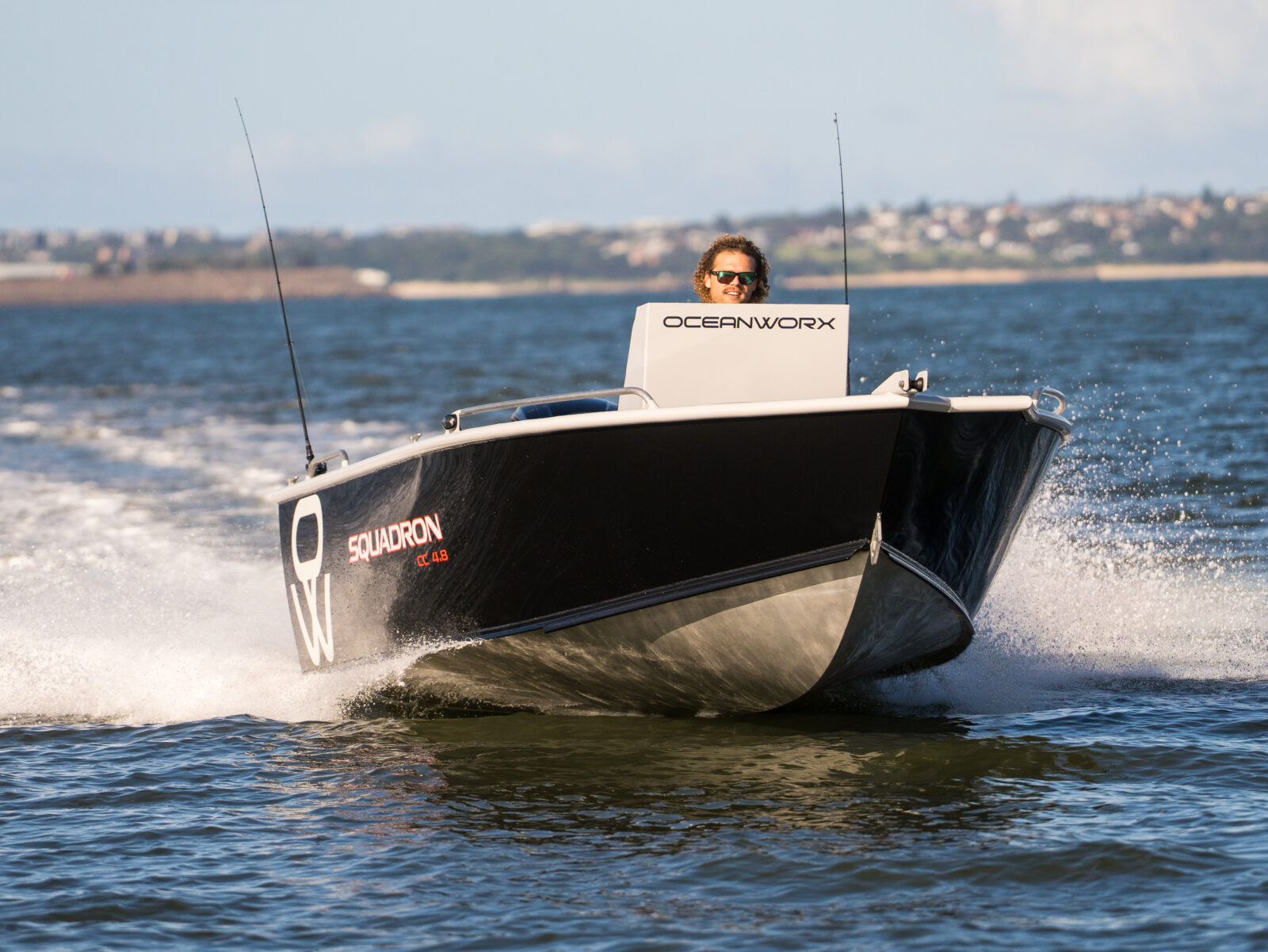
Another advantage in a centre console is its full 360 fishability. You can move all around the boat while fishing, and even more importantly, while hooked up to a big fish. Anyone who has hooked a big fish in a small boat can testify how having a clean boat with easy 360 degree access makes a big difference!
One interesting factor not often taken into account is how each configuration affects performance. You can have one hull, exactly the same, and configure it as a side console, centre console, canopy and tiller. Each one of those boats can often feel and perform completely different. The weight distribution and overall weight in the boat, even when you make fine adjustments, can greatly alter the performance of the boat.
I’m happy to report both configurations tested here passed with flying colours. They definitely felt different when it came to performance, although one didn’t seem to out-perform the other – at least, not in the short time we had on the water.
The Squadron range
So how does the Oceanworx 4.8 Squadron stack up as a side or centre console? The Squadron is a great example of a quality boat. Both models feel much more capable as an all round boat for larger estuaries and even offshore on good days.
The Squadron range is built using 5083 grade plate alloy with 4mm bottoms and 3mm sides. In the Oceanworx line-up, the Squadron range is positioned as the value package and sits under the marine grade high-tensile aluminium models such as the Airier, Axcess and Tempest. The Squadron is built using the same DNA as these premium models and they perform exceptionally well.
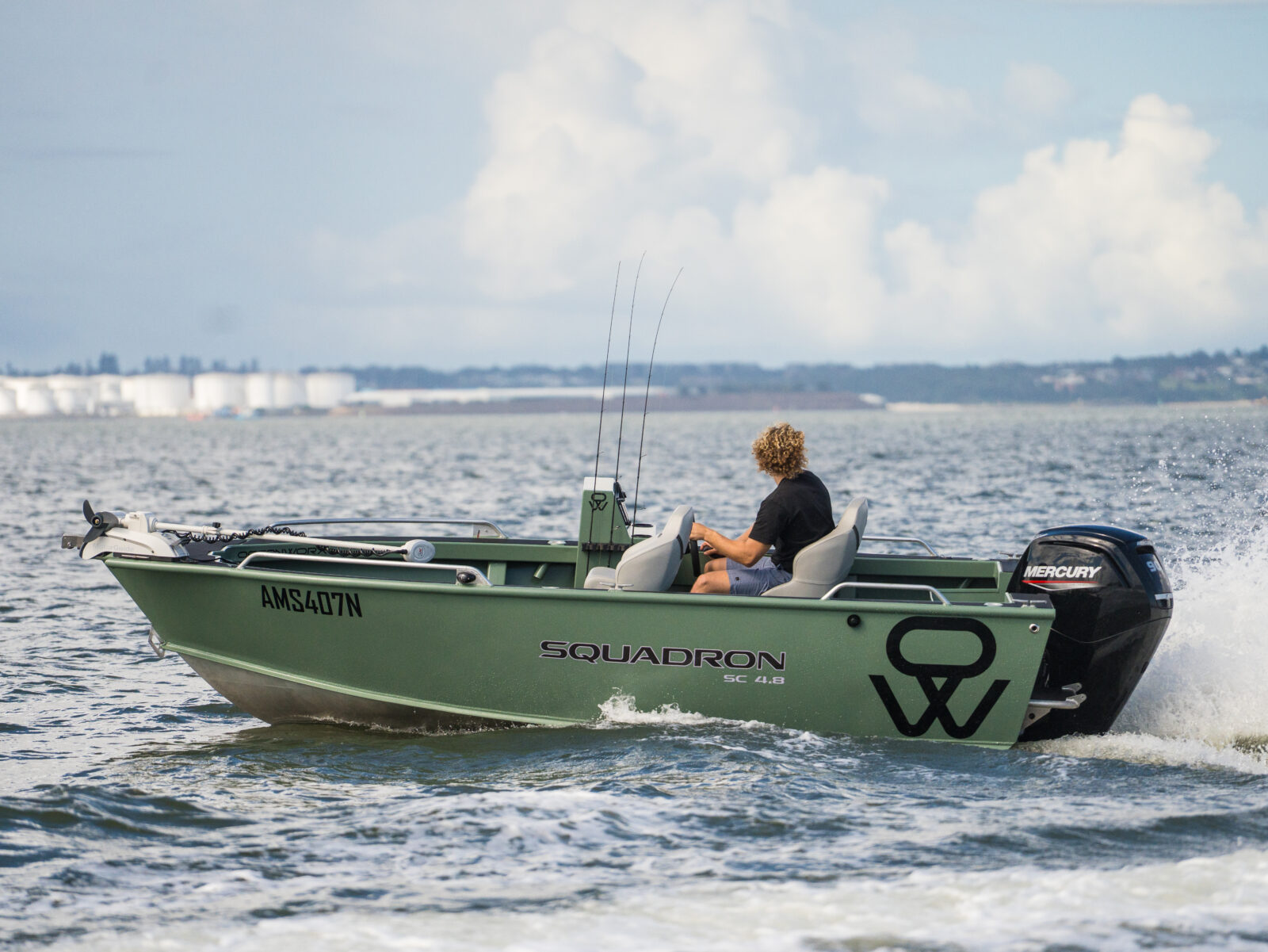
Both models were given a blast on Botany Bay where an afternoon squall whipped up some chop. They remained dry and rode nice and softly in all directions.
They’re fun to drive and perform tight turns safely. They’re also no slouch with Mercury’s 90hp four-stroke offering exceptional hole shot and an impressive top speed around 40 knots.
As mentioned above, Oceanworx’s Samson Rodway spends countless hours on and off the water tweaking the design to create a boat that’s both practical for fishing, safe, and fun to drive.
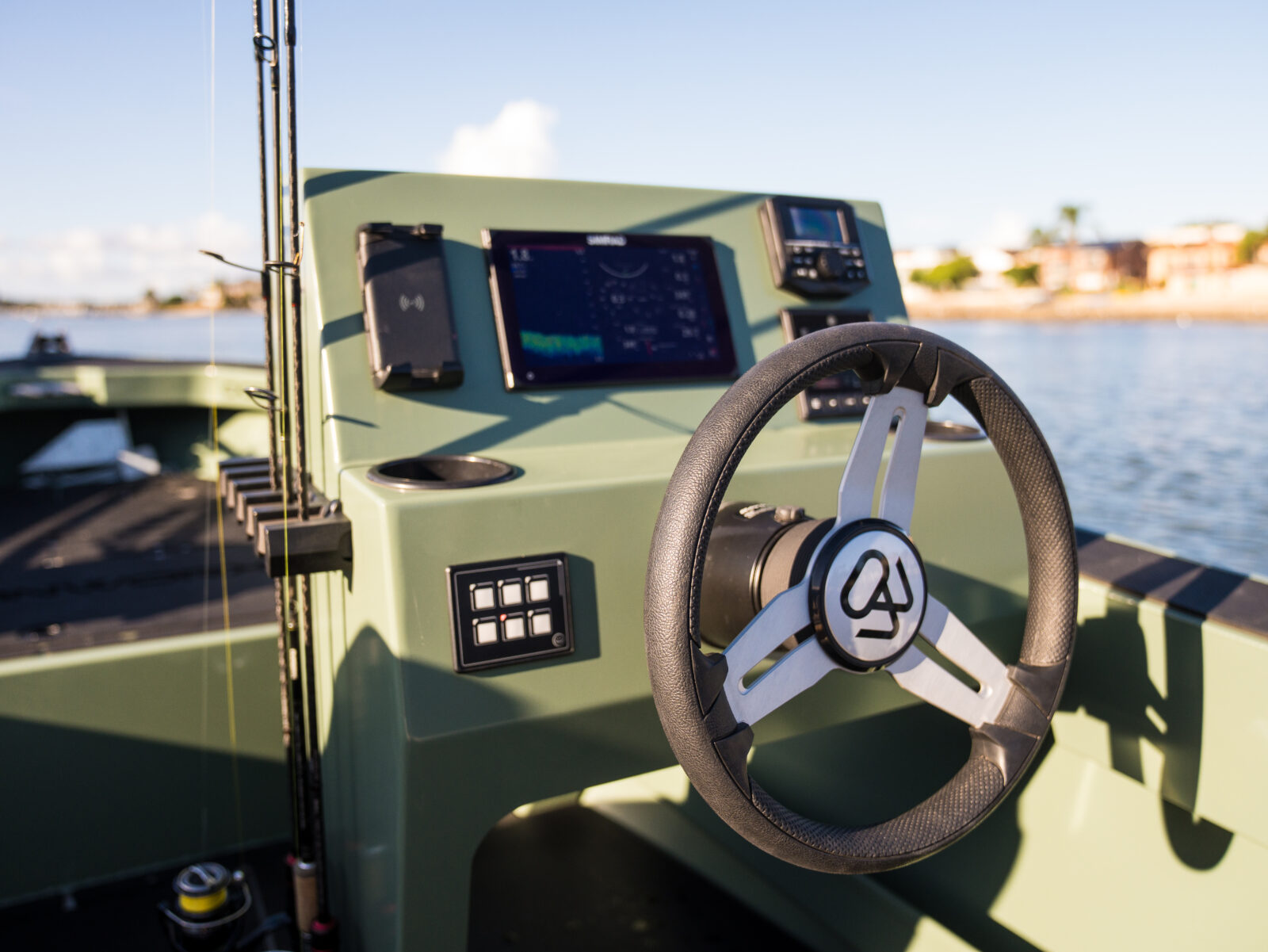
Both models come standard with 9” Lowrance sounder GPS, helm seat and aluminium flooring. There’s also rod holders, plumbed live bait tank, hydraulic steering, boarding ladder, bilge pump, safety gear and plenty more included as standard.
The configuration across both models, besides the consoles and seating, include a rear casting deck with storage and live well, carpeted aluminium flooring, and a forward elevated casting area with additional storage. There’s also a mount for a trolling motor on the bow.
Overall, both models are nicely fitted out and have plenty of standard inclusions for the average fisho at a reasonable price.
The verdict
Which one is better – side console or centre console. Personally, I lean towards the centre console. I prefer standing and enjoy having that 360 fishing space. That said, I was quietly impressed with the side console version. Both models – at 4.8m long – make an ideal size for a long list of purposes. Both are well suited to impoundments, rivers, estuaries and even offshore. Both have great stability at rest and loads of space to walk around and fish. Storage is ample and the finish and quality of the boats appear to be a high standard.
Oceanworx has done a great job refining its range between the high end and fully spec’d high tensile models and the value Squadron range.
Check out the range at oceanworx.au or @oceanworx_ on socials for videos and further details.